

There is something quite surreal about standing inside a Victorian pottery factory, watching people hand-finish ceramics in Stoke-on-Trent in 2026 while discussing government policy, energy prices and the future of British manufacturing with the Secretary of State for Business and Trade.
That was my Friday.
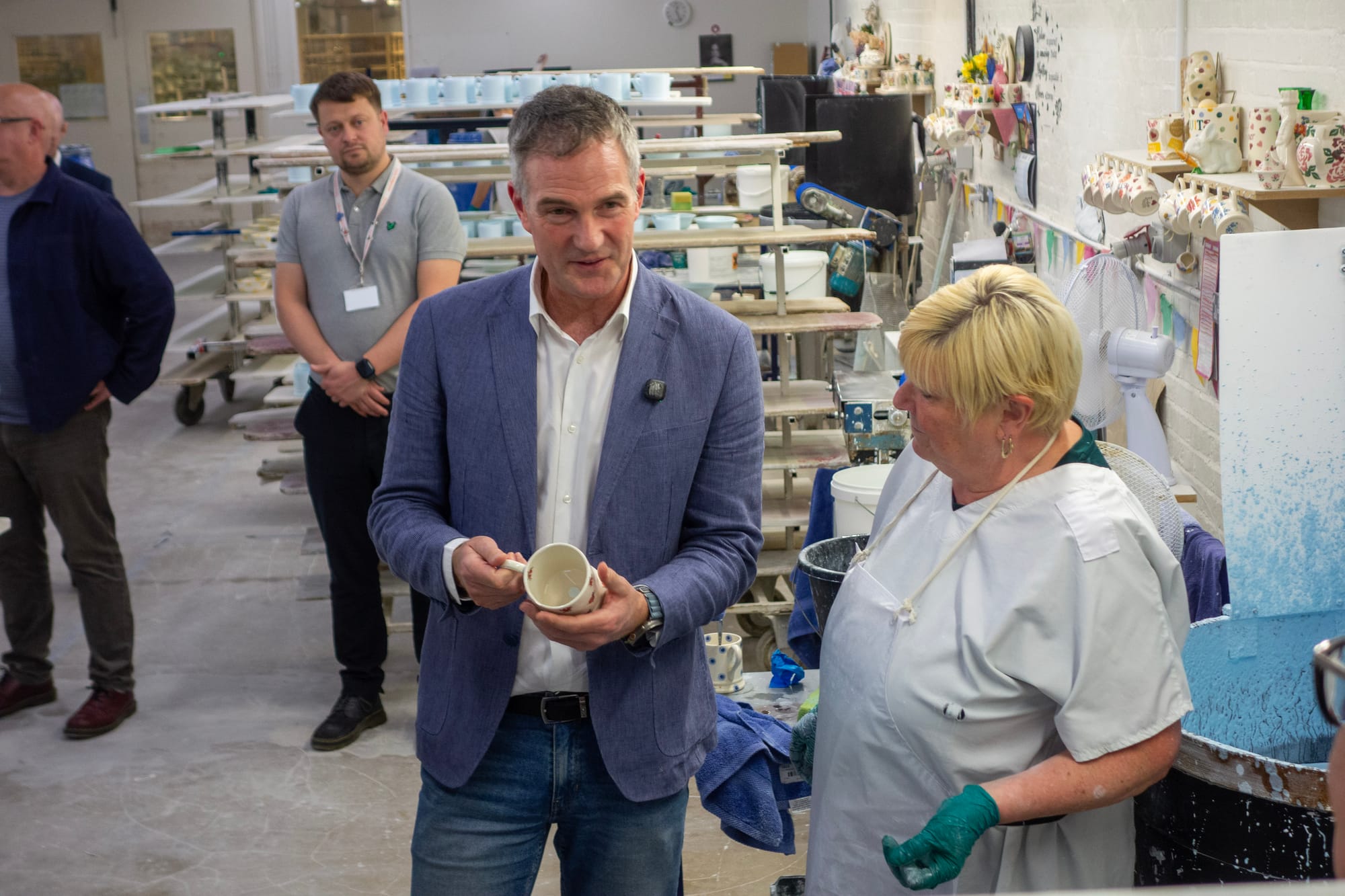
I visited Emma Bridgewater to tour the factory and interview Business Secretary Peter Kyle following the announcement of a £120 million government support package for the UK ceramics industry.
For people outside Stoke-on-Trent, £120 million probably sounds like just another government figure attached to another political announcement.
Here, it feels deeply personal.
Because ceramics in Stoke-on-Trent has never simply been an industry. It is identity, heritage, family history and, for thousands of local people, the reason generations of families have been able to build lives here. It is part of the rhythm of the city itself.
Also joining the visit was Stoke-on-Trent Central MP Gareth Snell, who, alongside pottery firms, unions and industry leaders, has spent years pushing for greater recognition and support for the ceramics sector in Westminster.
And for the first time in a long time, it genuinely feels as though Westminster might finally be listening.
What Is The £120 Million Ceramic Support Package?
The government’s newly announced support package includes £60 million of capital investment funding to help ceramics manufacturers modernise equipment and improve energy efficiency, alongside a further £60 million to help businesses manage operational costs.
The funding comes after years of lobbying from pottery firms, MPs, unions and industry leaders, all warning that soaring energy prices, overseas competition and rising production costs were placing enormous pressure on the sector.
This is not theoretical.
The industry has already lost businesses. Factories have closed, jobs have disappeared and some iconic names have struggled to survive. At the heart of many of those problems has been energy.
Ceramics production relies heavily on gas-fired kilns, with one report commissioned by Stoke-on-Trent City Council stating that gas accounts for around 90% of the sector’s energy consumption.
That is why this funding matters so much.
Not just to the household names people recognise on shelves, but to the decorators, mould makers, kiln workers, warehouse teams, designers, packers, suppliers and independent makers who form part of the wider ecosystem of ceramics across Staffordshire.
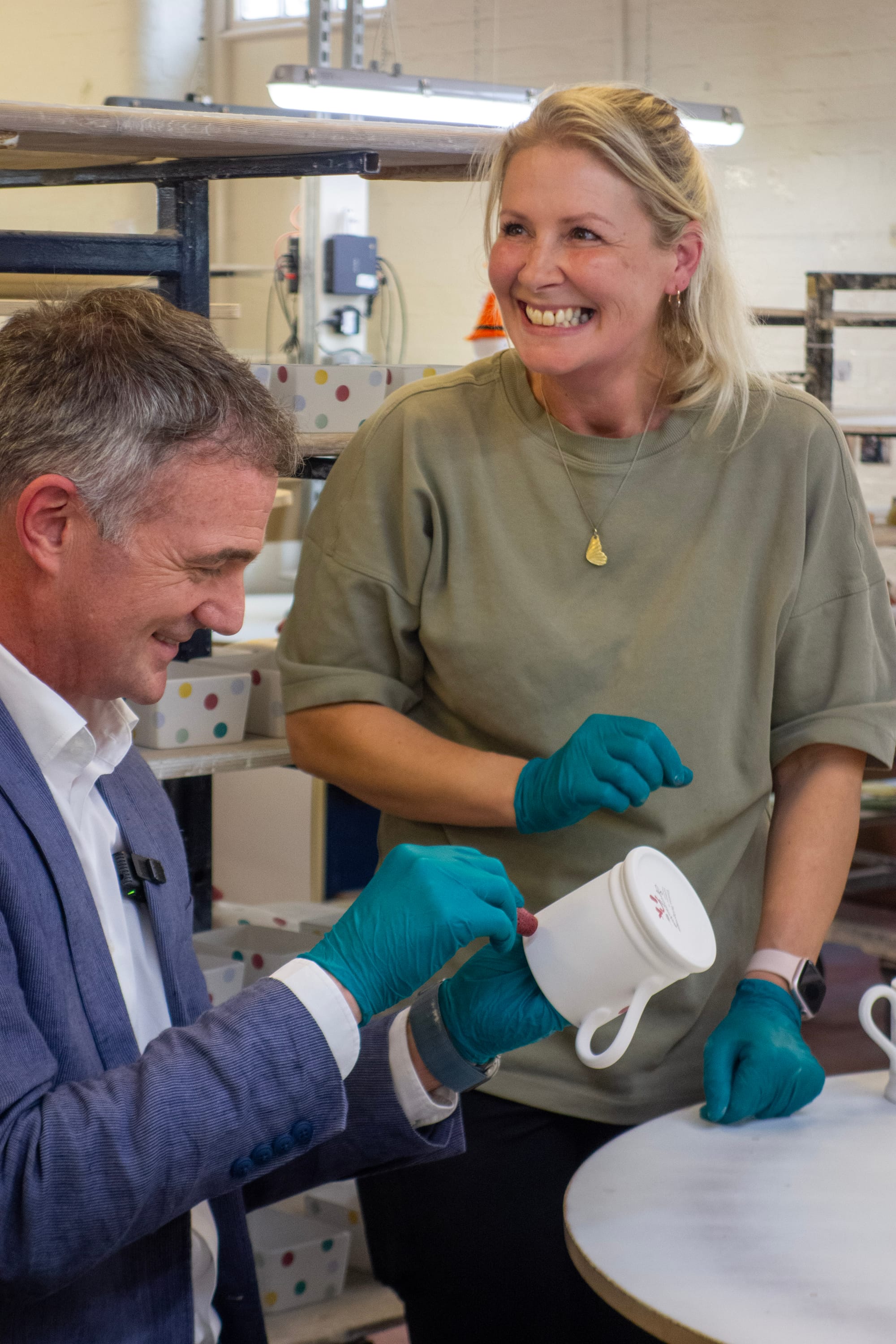
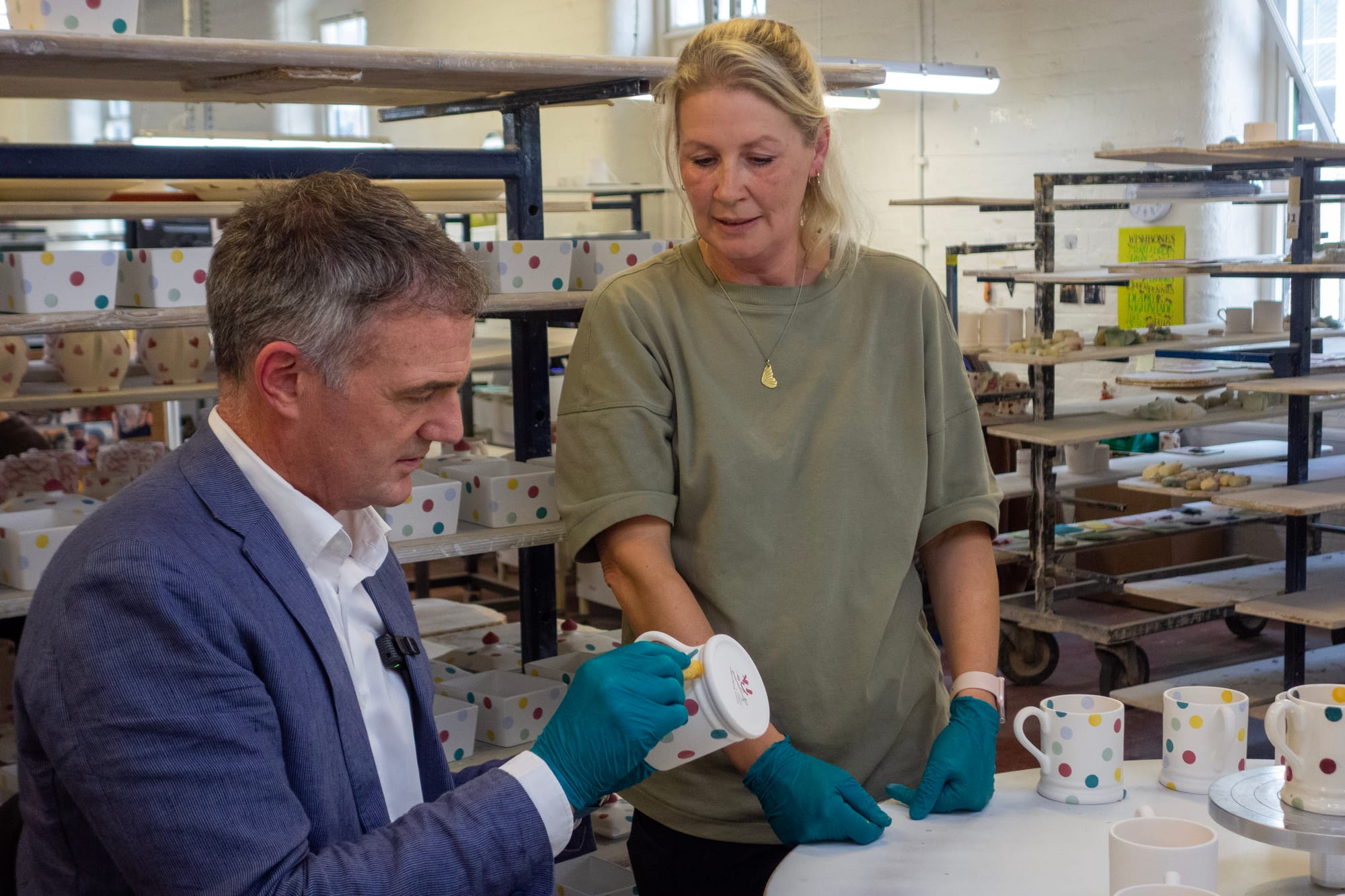
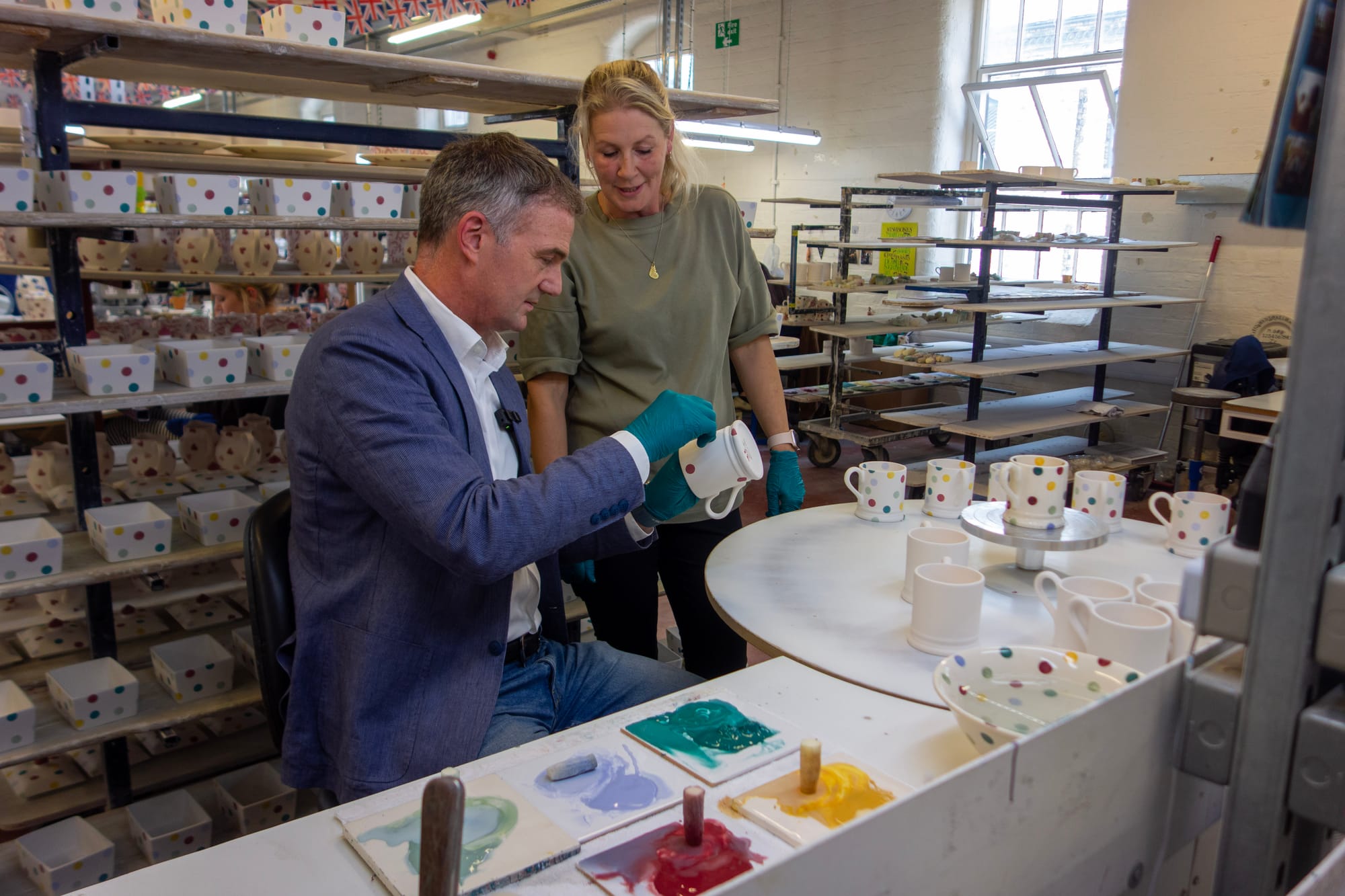
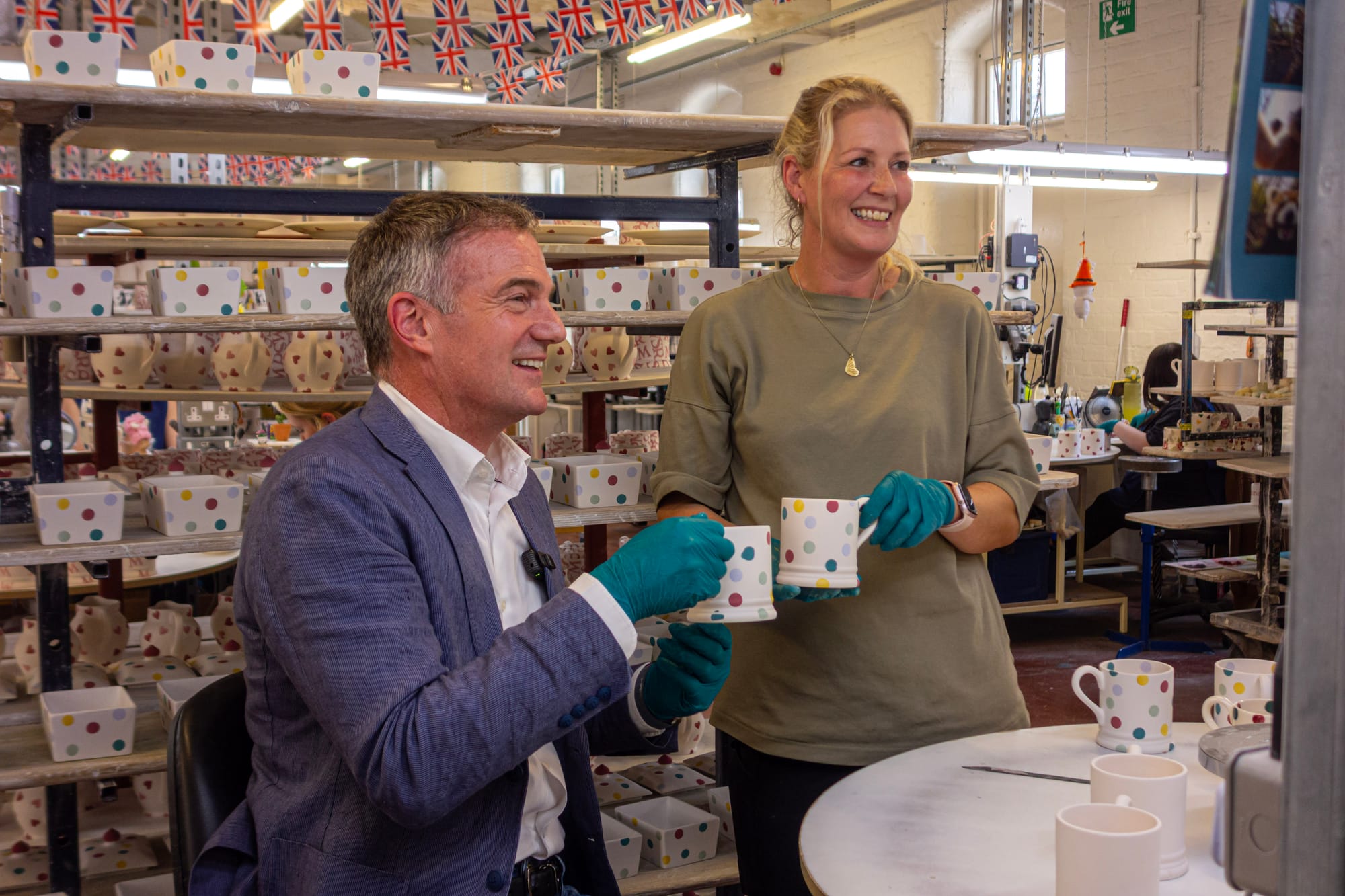
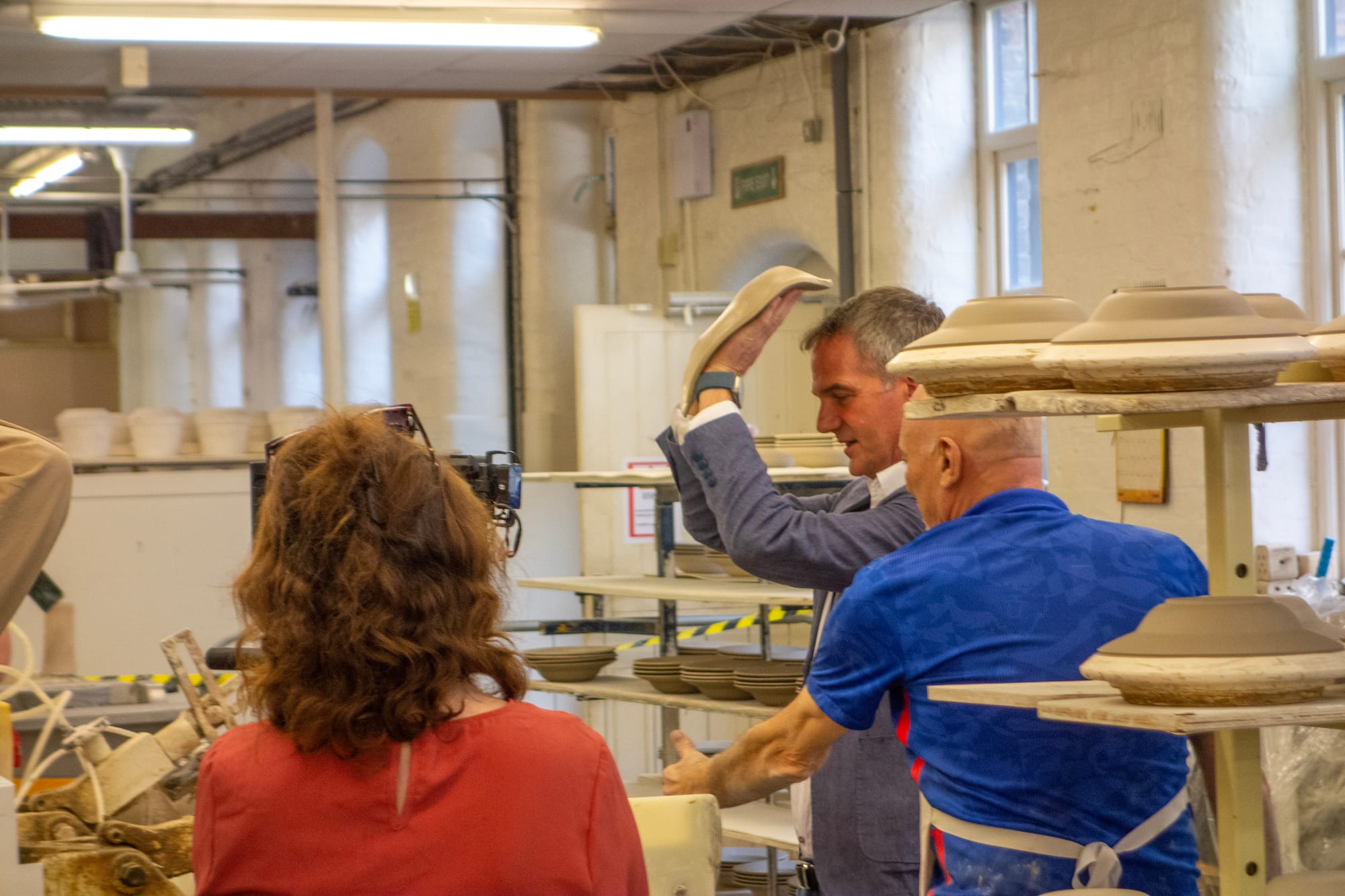
Business Secretary Peter Kyle tried his hand at decorating a cup as he takes a tour of the Emma Bridgewater pottery factory in Stoke-on-Trent
Walking Around Emma Bridgewater
What struck me most during the visit was how alive the factory felt.
There is often this misconception outside Stoke-on-Trent that pottery is something historical, almost frozen in time, a relic of Britain’s industrial past that people occasionally visit on school trips or see represented by bottle ovens on postcards.
But walking around the Emma Bridgewater factory reminds you immediately that this is still a living, breathing industry.
There were people laughing across workbenches, chatting while carefully decorating ceramics by hand, moving with the kind of speed and confidence that only comes from years of skill and repetition. There was warmth, humour and pride in the building, but also real craftsmanship.
When I asked Peter Kyle whether he had ever visited a Victorian pottery factory before, he admitted he had not. But what struck me was how quickly he seemed to understand the atmosphere of the place and the importance of preserving not just the buildings, but the life inside them.
“It feels like you're walking into a friendly family business,” he told me. “The combination of it being a historic building and having vibrant life inside is exactly what I see represented here in this business, but also the ceramics industry in general.”
He also spoke about the balancing act ceramics companies now face, preserving heritage while surviving in a modern global economy.
“The challenge is how you take a traditional business, a heritage business, and then set it in the modern times that we're living in,” he said. “Facing the future, finding a market, staying true to the values of that heritage in the way that you produce, but also doing it in a way that can compete in the modern world.”
That probably sums up Stoke-on-Trent perfectly.
This city is not asking to be preserved in amber. It is not asking people to buy ceramics out of sympathy or nostalgia. What it wants is the opportunity to compete fairly while protecting the skills and craftsmanship that make the industry unique in the first place.
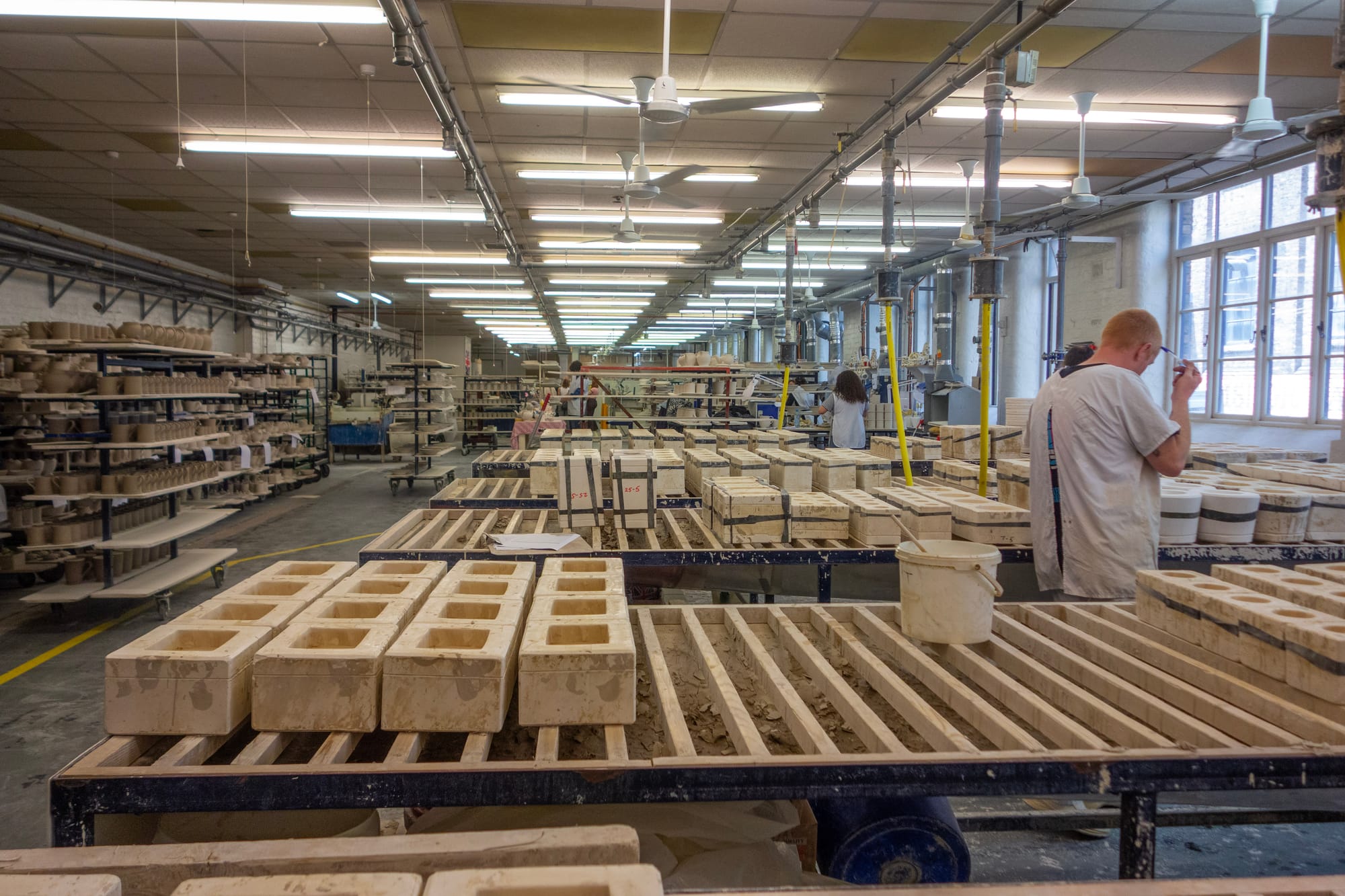
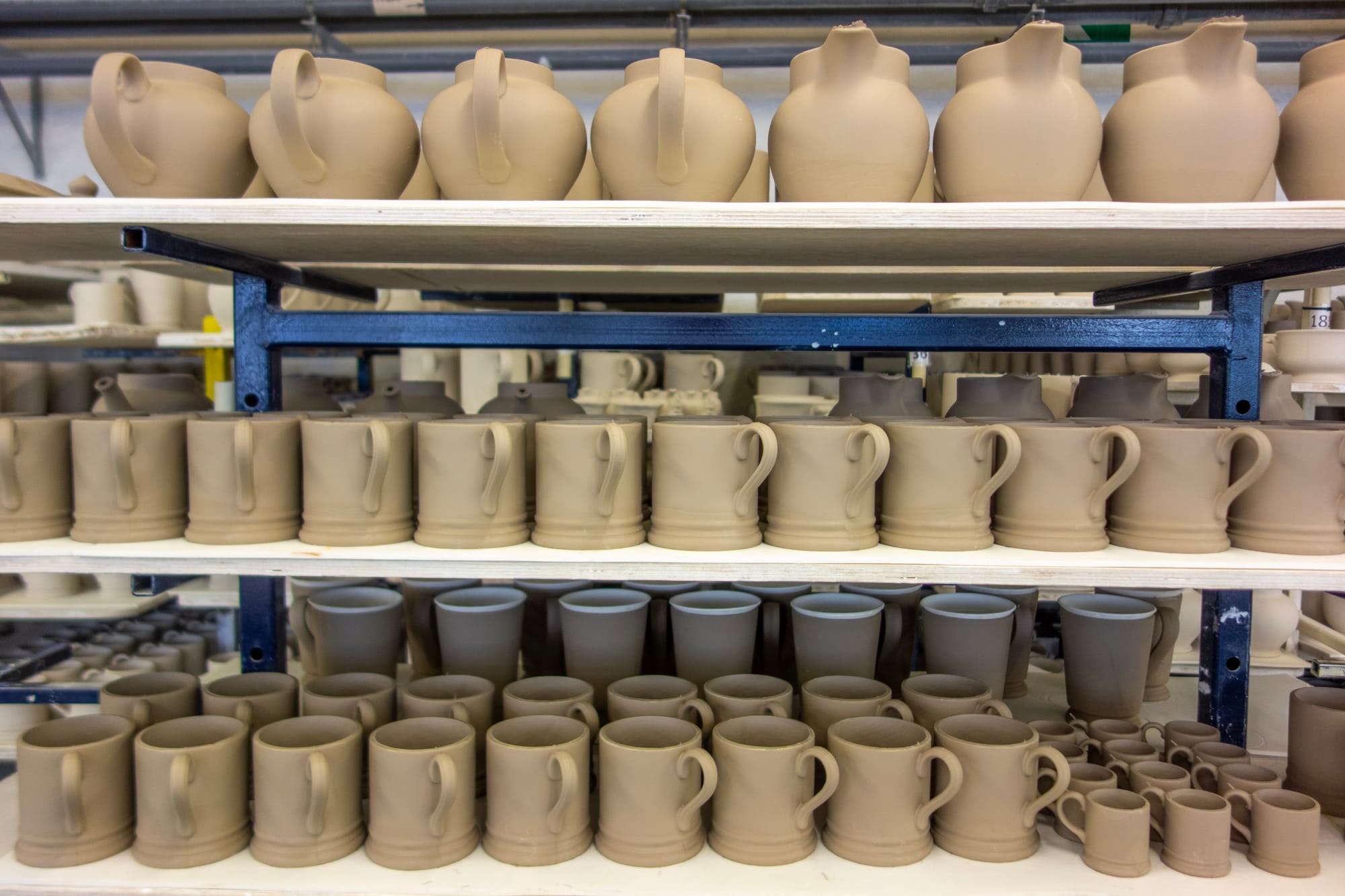
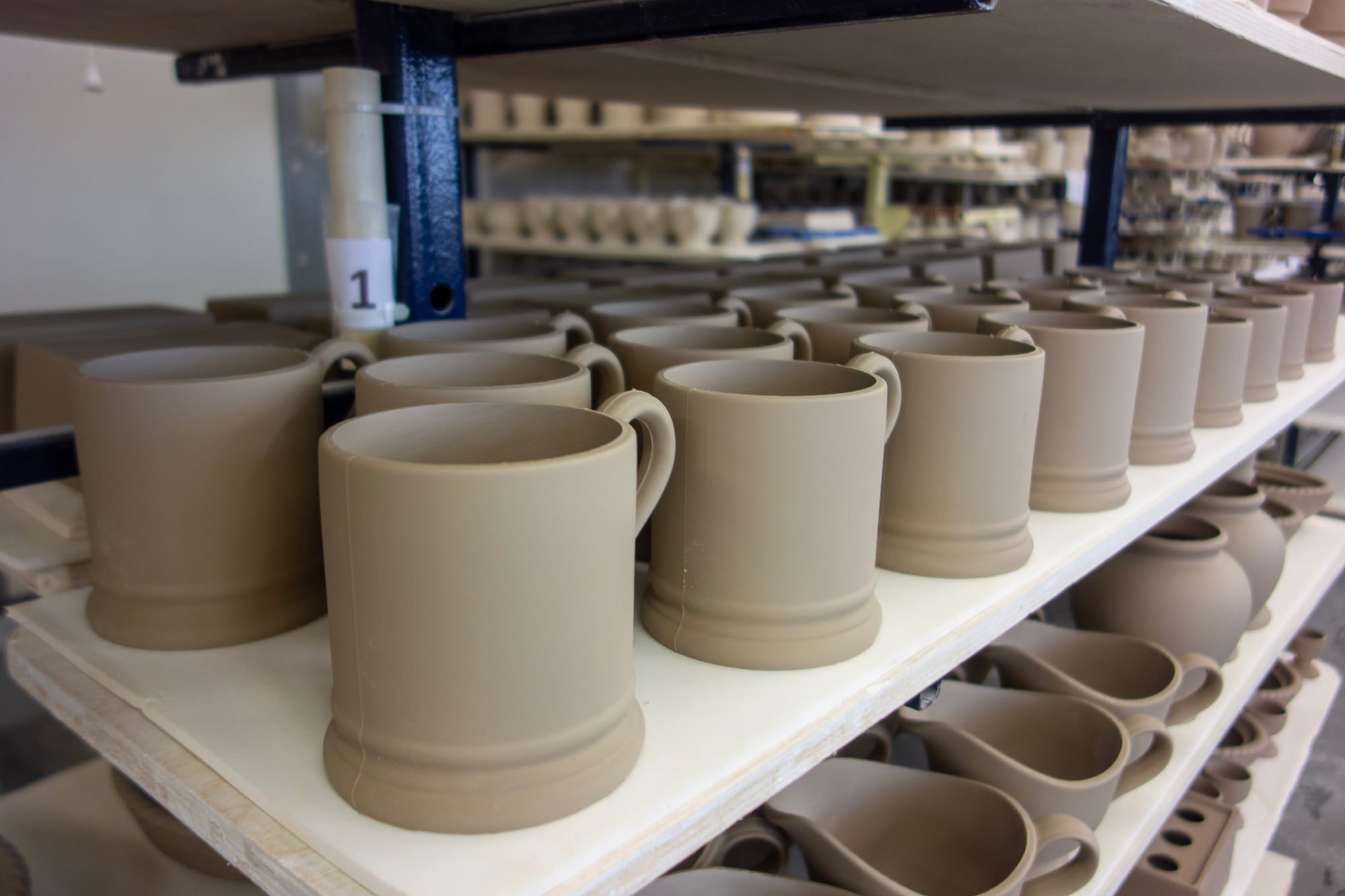
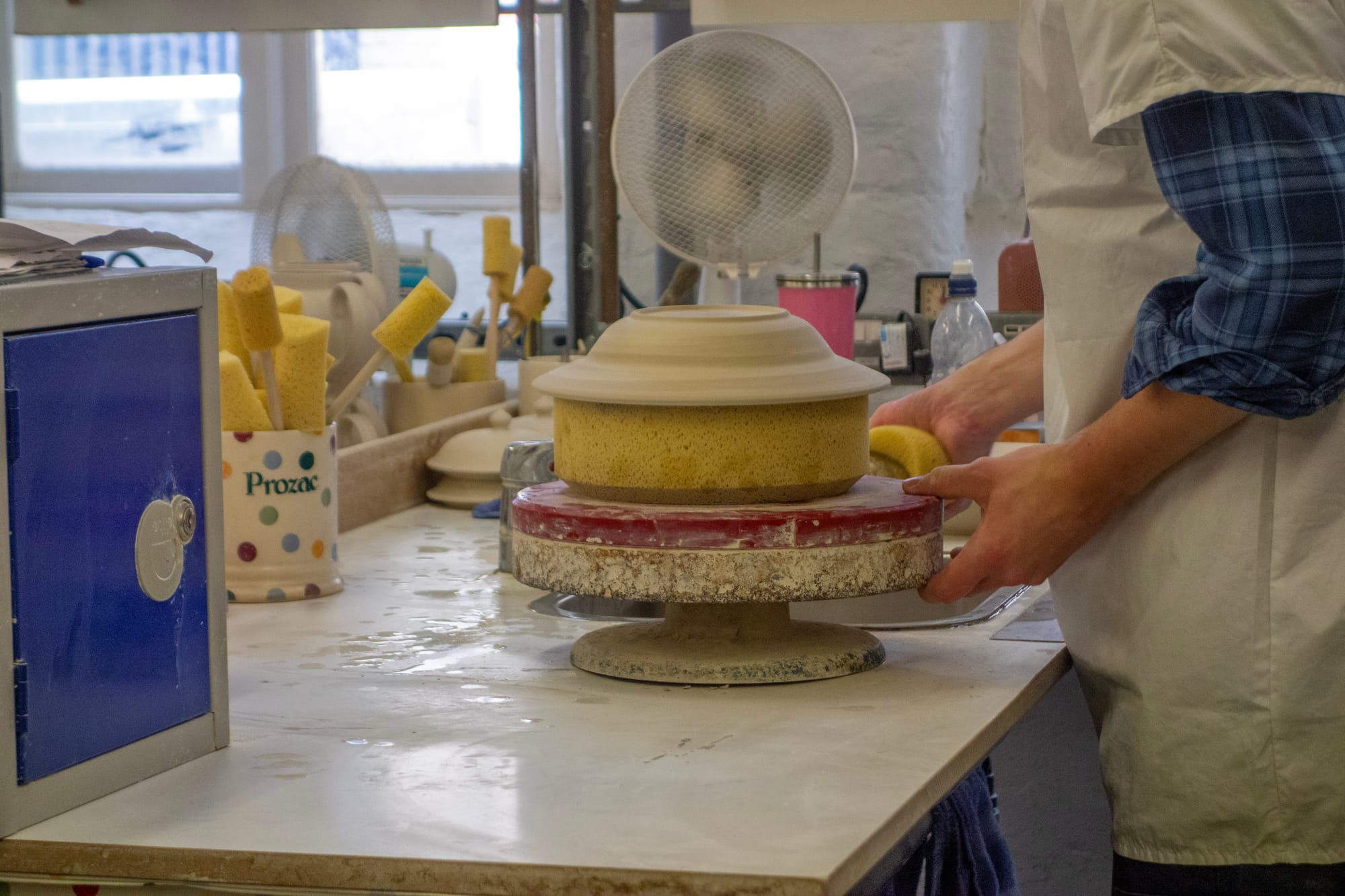
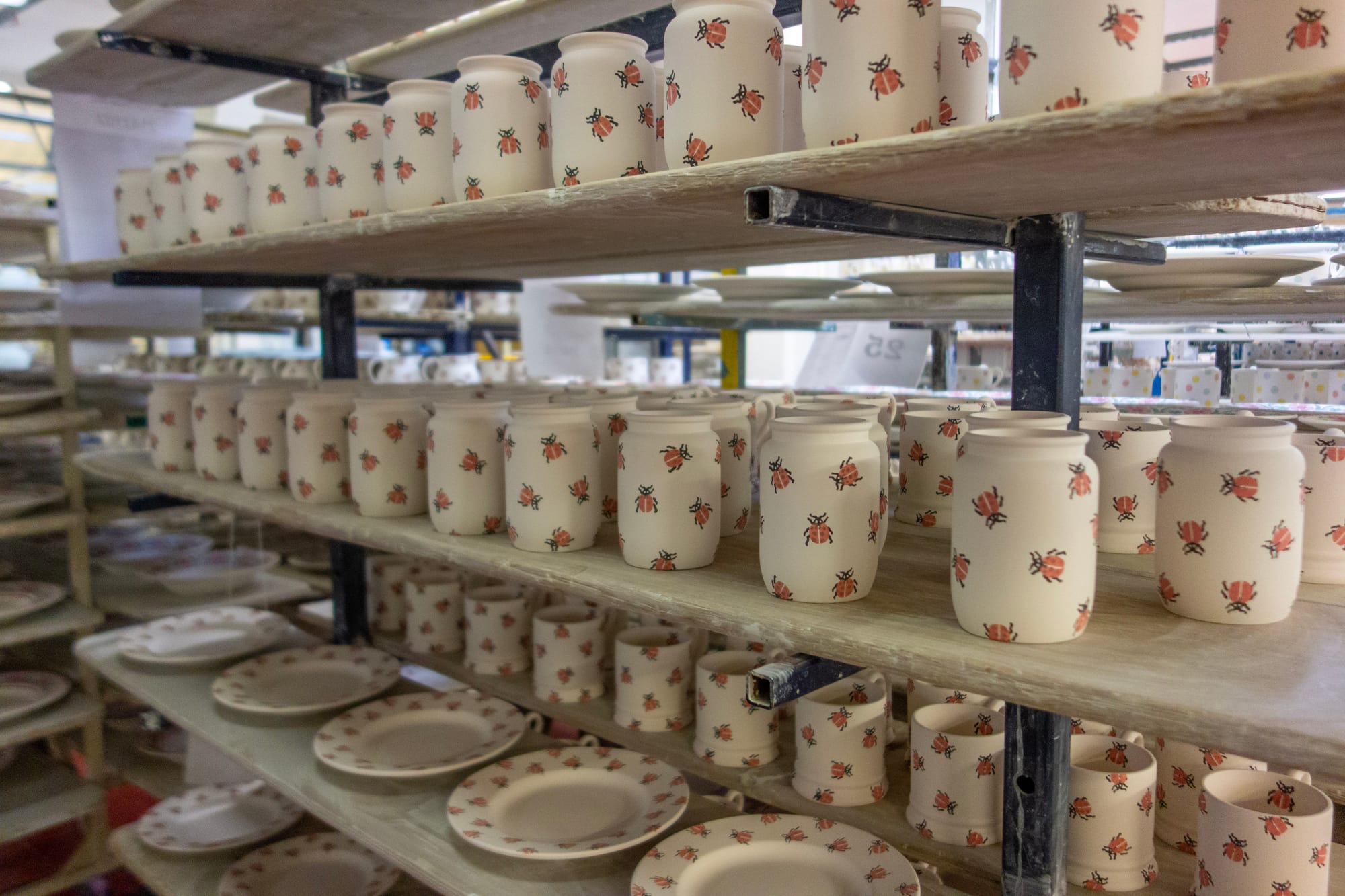
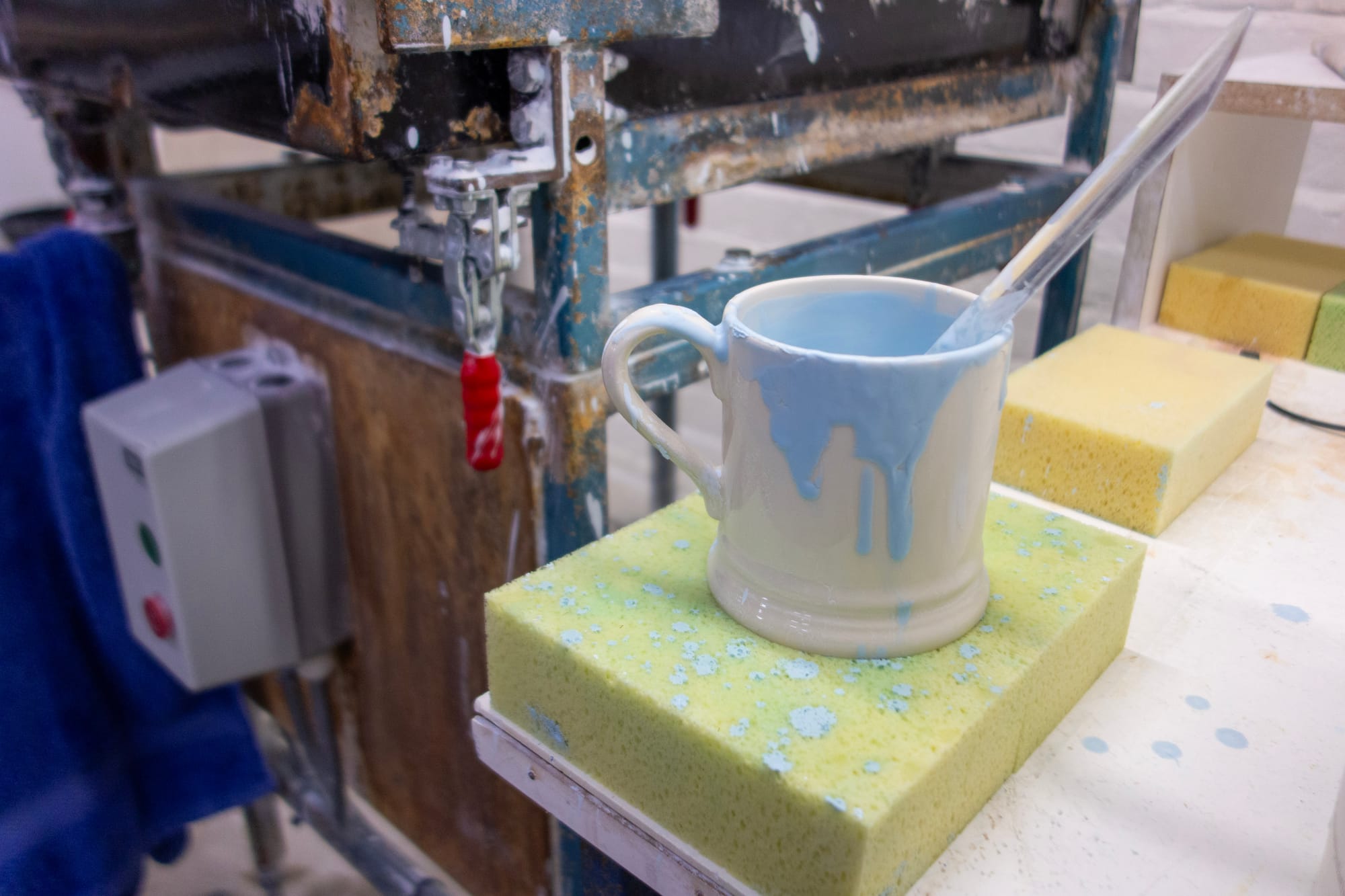
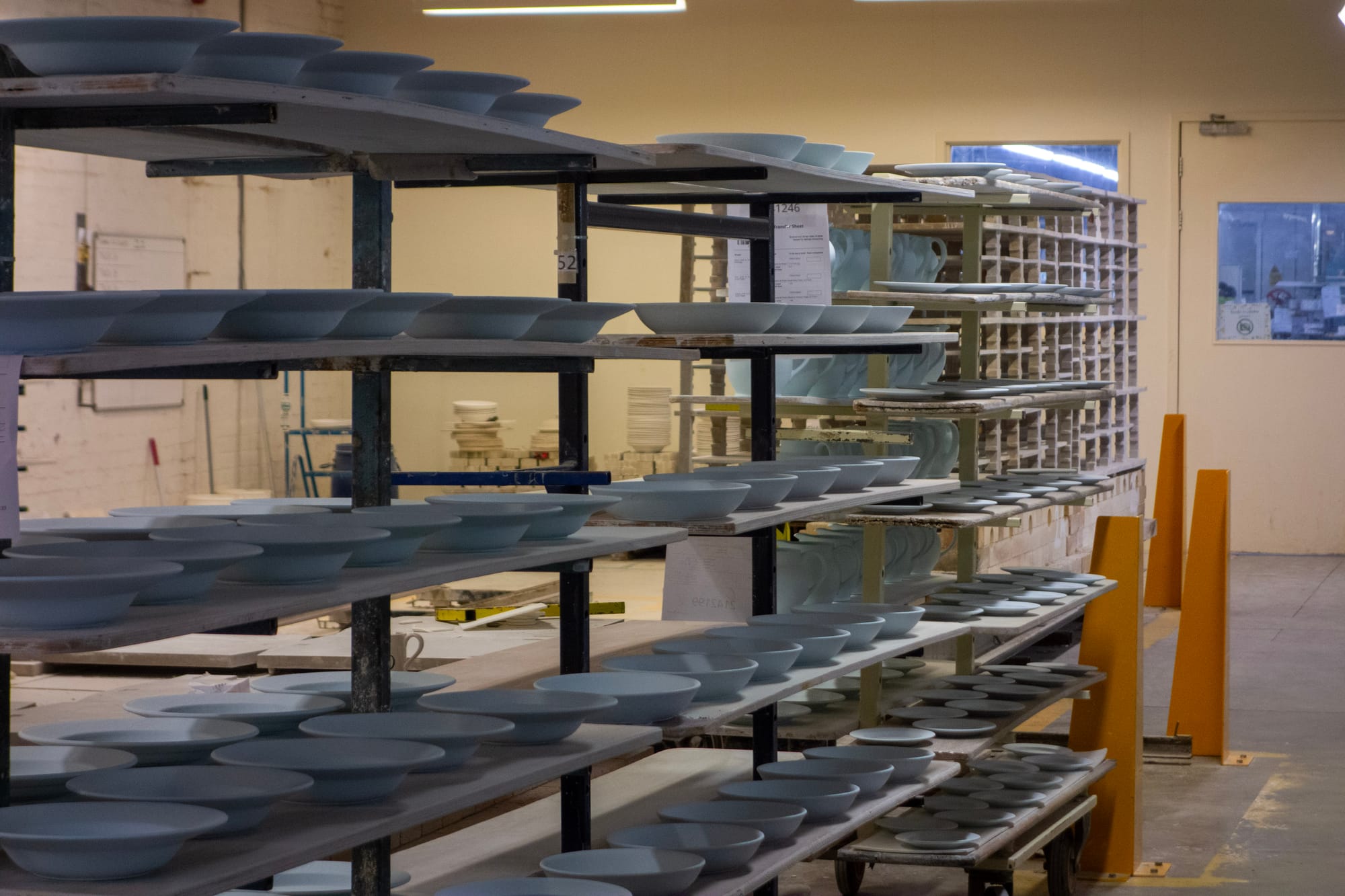
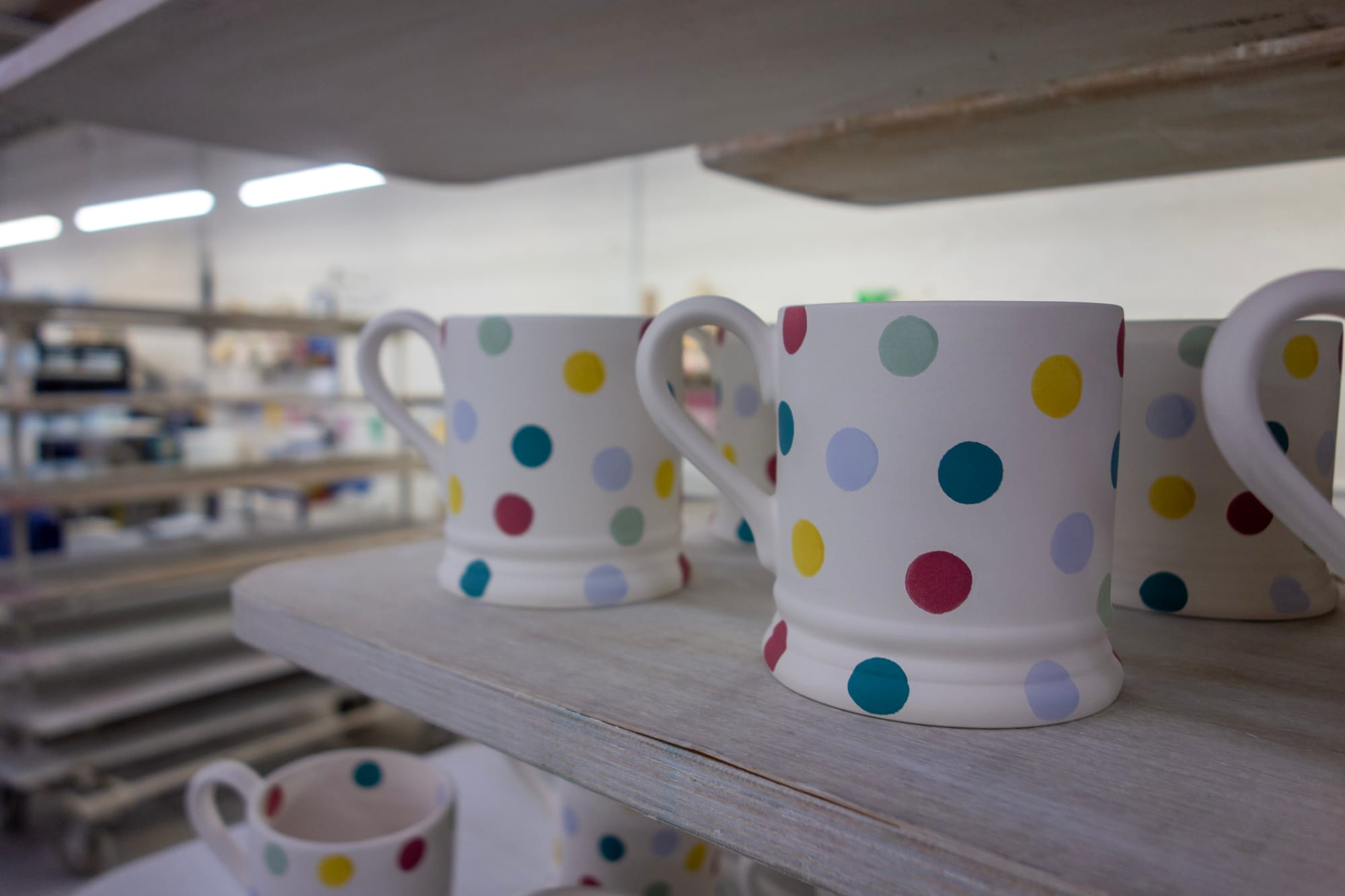
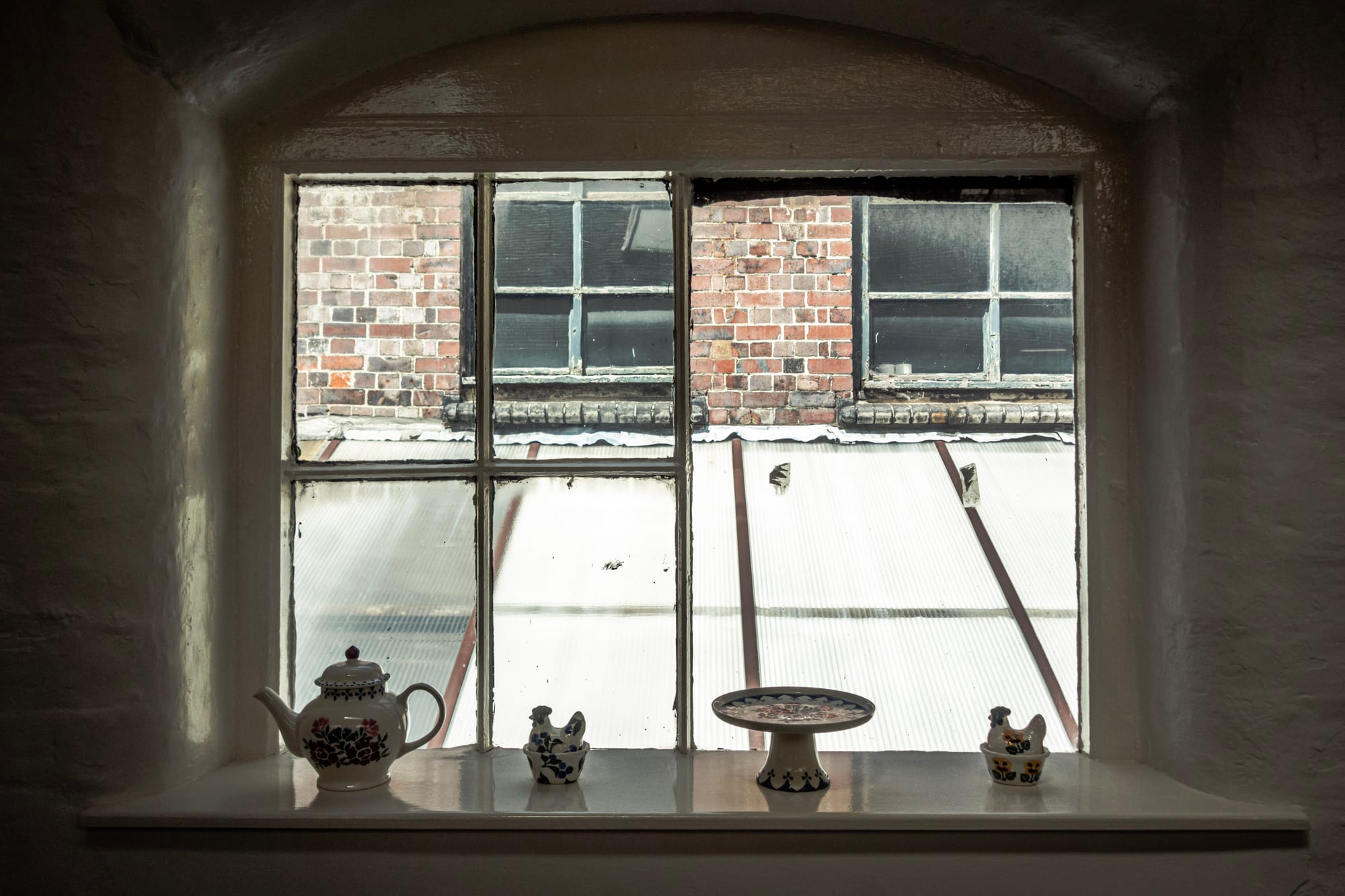
The Emma Bridgewater factory, Stoke-on-Trent
Why This Fund Feels Different
One thing Peter Kyle repeatedly stressed during the interview was that this package had been deliberately designed specifically around ceramics, rather than trying to squeeze the industry into broader manufacturing support schemes that do not really reflect the realities of pottery production.
“People have constantly been asking me, will I do this scheme or that scheme, but nothing quite fitted ceramics,” he explained. “So creating a scheme that has £60 million for investment in transformation and then £60 million to help with revenue costs through that period gives so much flexibility.”
That flexibility matters because ceramics in Staffordshire is incredibly diverse.
You have small independent makers hand-throwing pottery in studios, large-scale tableware manufacturers exporting around the world, and advanced ceramics companies producing specialist materials for aerospace, defence and engineering sectors.
Each faces different challenges, and modernisation will not look the same for all of them.
The Energy Challenge Is Still Huge
One of the biggest issues facing the industry remains energy.
During the interview, I asked Peter Kyle about concerns surrounding the shift towards electric kilns and whether there would be future funding for research and development, particularly for businesses requiring temperatures that current electric technology still cannot achieve.
His answer again focused heavily on flexibility and allowing businesses themselves to determine what modernisation means for them.
“Modernisation doesn't mean the same thing in every company,” he explained. “Modernisation in some companies might be the way it's marketed, it might be the way that it adapts products, the way that it trains its workforce.”
He also made it clear that he did not want government imposing solutions from London onto Stoke-on-Trent businesses.
“I'm not coming in from London to tell businesses how to do it,” he said.
And honestly, that is probably the right approach.
The ceramics industry is incredibly specialised, and many of the people working inside these factories know far more about the technical realities of production than politicians ever could.
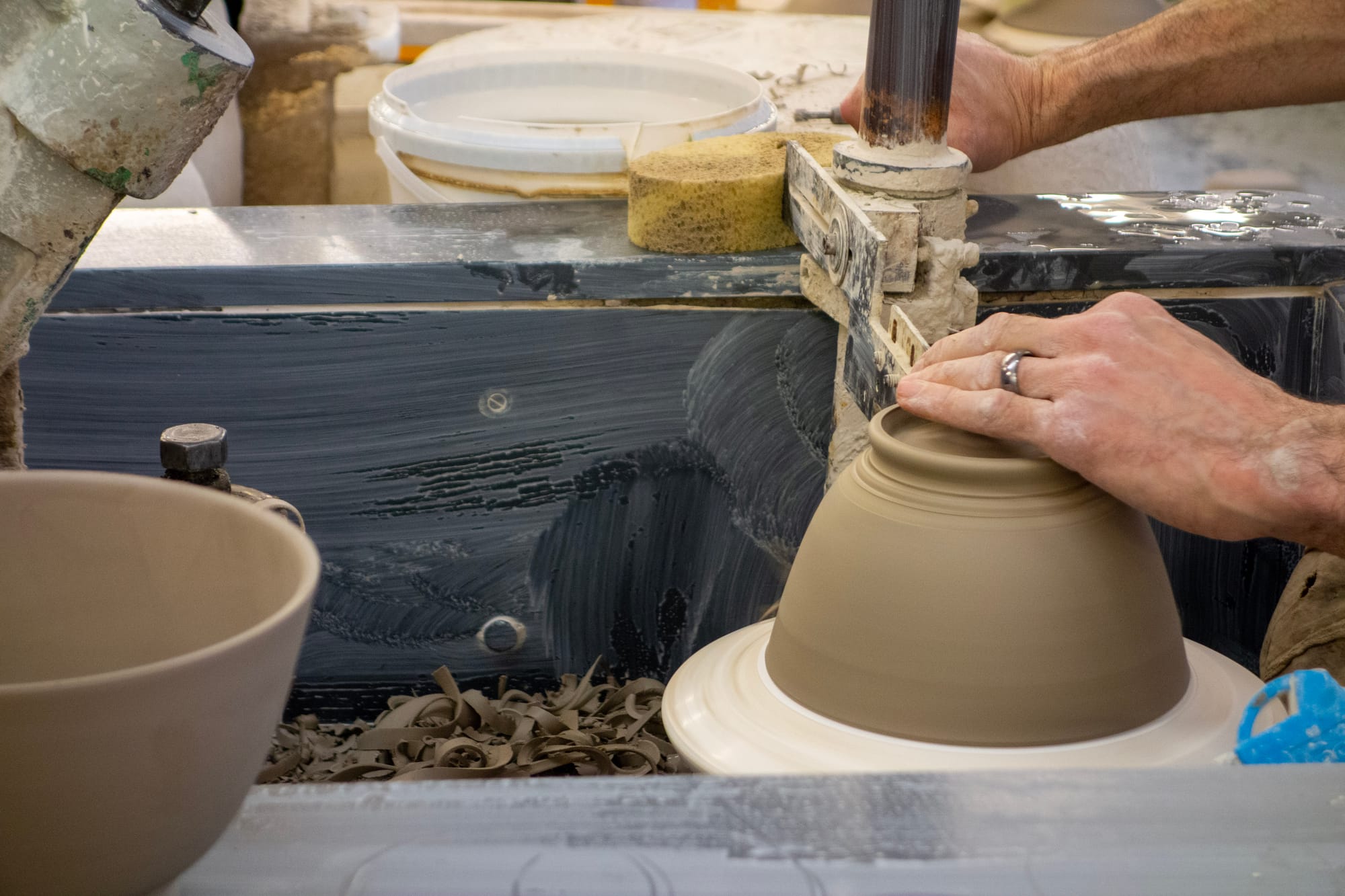
Some businesses may invest in greener kilns, others in machinery, exports, training or digital systems. What matters is that many firms now have the opportunity to invest in their future rather than simply trying to survive month to month.
More Than Manufacturing
One moment during the interview genuinely stayed with me afterwards.
Peter Kyle spoke openly about not wanting to see Stoke-on-Trent experience the kind of industrial decline that scarred communities elsewhere in Britain during previous decades.
“The idea that on my watch, a sector could disappear and leave a scarring for a community that Thatcher left in parts of the Northeast and East and West Midlands… I wouldn't get to sleep.”
Whatever people’s politics, I think most people in Stoke-on-Trent understand exactly what he meant.
This city knows what industrial decline looks like. It knows what happens when factories close, when skilled jobs disappear and when industries that communities were built around slowly vanish.
That is why pottery still matters so much here.
Not because people are trapped in the past, but because they understand the cost of losing industries that hold communities together.
Peter Kyle also spoke about the connection between businesses, families and communities in Stoke-on-Trent, and I actually think this was the moment where he seemed to truly understand the city itself.
“When people go home in the evening, their families depend on these jobs as well,” he said. “When families are confident, then communities are as well.”
And he is right.
Pottery jobs in Stoke-on-Trent have never only been jobs. They support families, streets, local shops, schools and entire communities.
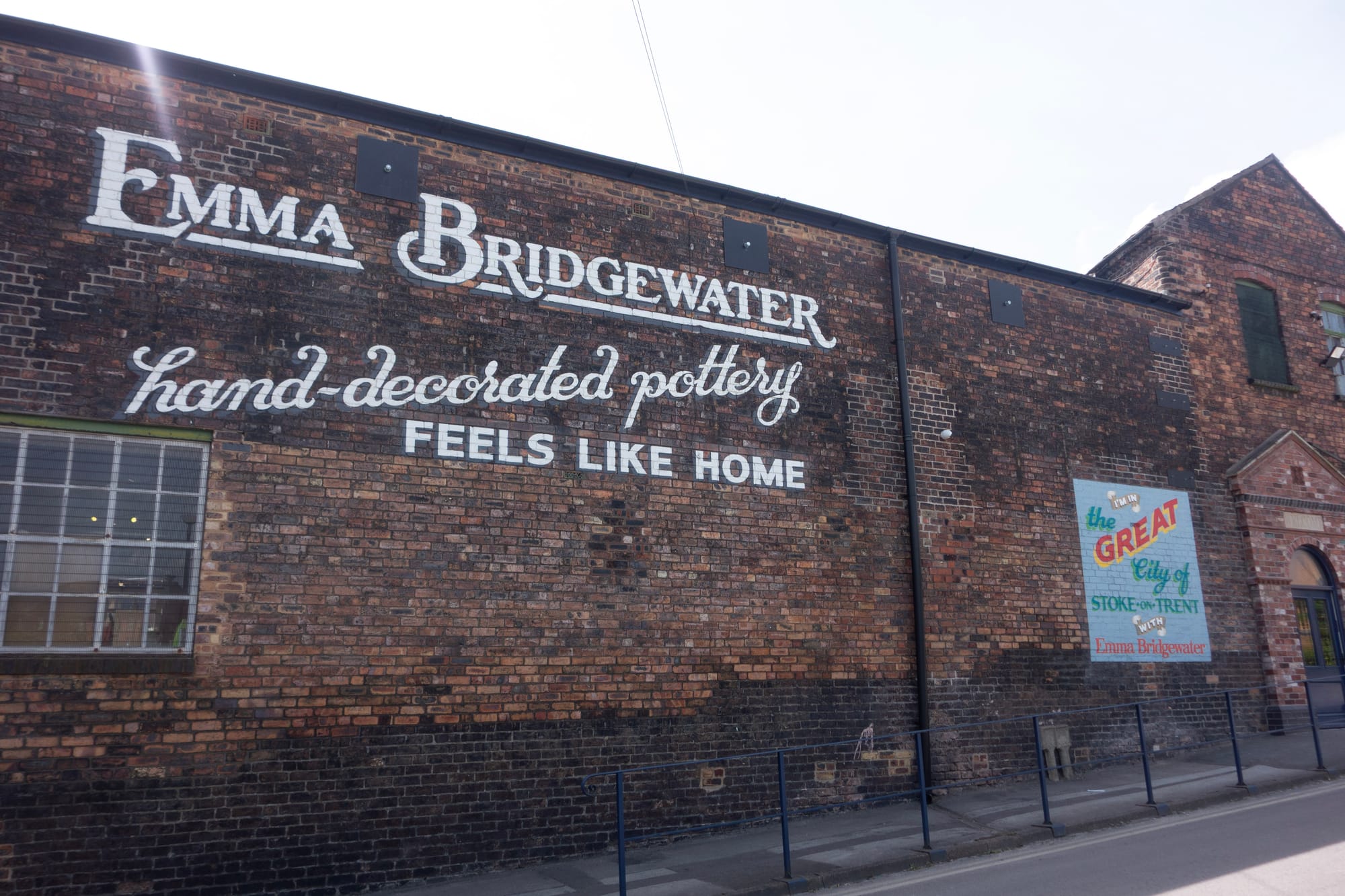
Storytelling Might Be One Of The Industry’s Greatest Strengths
What really stayed with me at the end of the day, though, was something much simpler.
At the end of the interview, I asked Peter Kyle whether seeing the craftsmanship and skill inside the factory would make him more likely to buy Stoke-on-Trent ceramics in future.
His response was immediate.
“There's no question,” he said.
I then asked whether storytelling and showing people what actually happens inside these factories is part of getting the public to support British ceramics.
Again, his answer came instantly.
“There's no question,” he said. “It does make you want to become an evangelist for this and businesses like it.”
And honestly, I think that is incredibly important.
Because most people never get to see what goes into making the things they buy.
They do not see the person carefully hand-painting a mug. They do not see the generations of experience standing behind every process. They do not see the workers who have spent decades mastering techniques that cannot simply be automated or replaced overnight.
Peter Kyle spoke about meeting one worker who was the third generation of his family to work in that very building, and about seeing the camaraderie, humour and pride among staff. He said:
“It'll be hard to conceive of ever buying anything else.”
And I completely understood what he meant.
Because once you actually walk around a pottery factory and witness the skill, care and humanity behind the products, ceramics stops being just another item on a shelf.
You begin to understand that when you buy something made in Stoke-on-Trent, you are not simply buying a mug or a plate. You are buying into generations of craftsmanship, protecting specialist skills and supporting communities that have spent centuries shaping this city’s identity.
That is why storytelling matters.
Not as marketing spin, but because people connect with people.
And perhaps that is something Stoke-on-Trent’s ceramics industry has always had in abundance.
Enjoyed this story?
The Staffordshire Signal is a not-for-profit, community-funded publication. Every tip helps keep local journalism free, independent, and focused on the stories that matter across Staffordshire.
Every contribution supports reporting, photography, and storytelling across the county.
Explore the heart of our county Use the interactive map above to discover local landmarks, heritage sites, and community-vetted spots. Every interaction helps support The Staffordshire Signal’s mission to keep local news free and independent.