

Ninety years after the Supermarine Spitfire first took to the skies, one of Britain's most iconic aircraft could be preparing for an unexpected new chapter, as a team of designers and engineers works towards creating a new generation of Spitfire inspired aircraft based on previously abandoned wartime plans.
The project centres around the Aerolite Spitfire Type 433, a newly developed two seater concept aircraft that its creators hope will eventually progress towards full production. Rather than restoring original wartime aircraft or producing static replicas, the ambition is to create entirely new aircraft inspired by the legendary Spitfire while using modern materials and engineering techniques.

Reginald MitchellReginald Mitchell was born at 115 Congleton Road, Butt Lane, Kidsgrove in 1895 and was educated at Hanley High School. At sixteen, he gained an apprenticeship at Kerr Stuart & Co of Fenton. After studying ...View Full Resource on Staffordshire Past Track
For Staffordshire, there is an added significance to the story because behind one of the world's most recognisable aircraft was a man from North Staffordshire whose work continues to capture imaginations nearly a century later.
Reginald Joseph Mitchell, better known as R.J. Mitchell, was born in Butt Lane in 1895 and grew up in the Potteries before beginning a career in engineering that would eventually see him become chief designer at Supermarine. While he designed numerous aircraft during his career, the Spitfire would become the machine forever associated with his name.

R. J. Mitchell's Birth Place, 115 Congleton Road, Butt LaneReginald J Mitchell, designer of the Spitfire, was born at 115 Congleton Road, Butt Lane, Stoke-on-Trent. ,He then moved with his family to 87 Chaplin Road, Longton, and later to nearby Victoria Cottage ...View Full Resource on Staffordshire Past Track
This year marks the 90th anniversary of the aircraft's maiden flight on 5 March 1936, and despite the passing decades, public affection for the Spitfire appears as strong as ever. Air displays featuring surviving examples still attract large crowds and the aircraft remains one of the defining symbols of Britain's role in the Second World War.
Anyone who has stood beneath a Spitfire display will recognise the reaction it creates. Recently at Tatenhill Airport, Lady Ellen III once again demonstrated why the aircraft still has such a hold over people.
 Natalee Trowbridge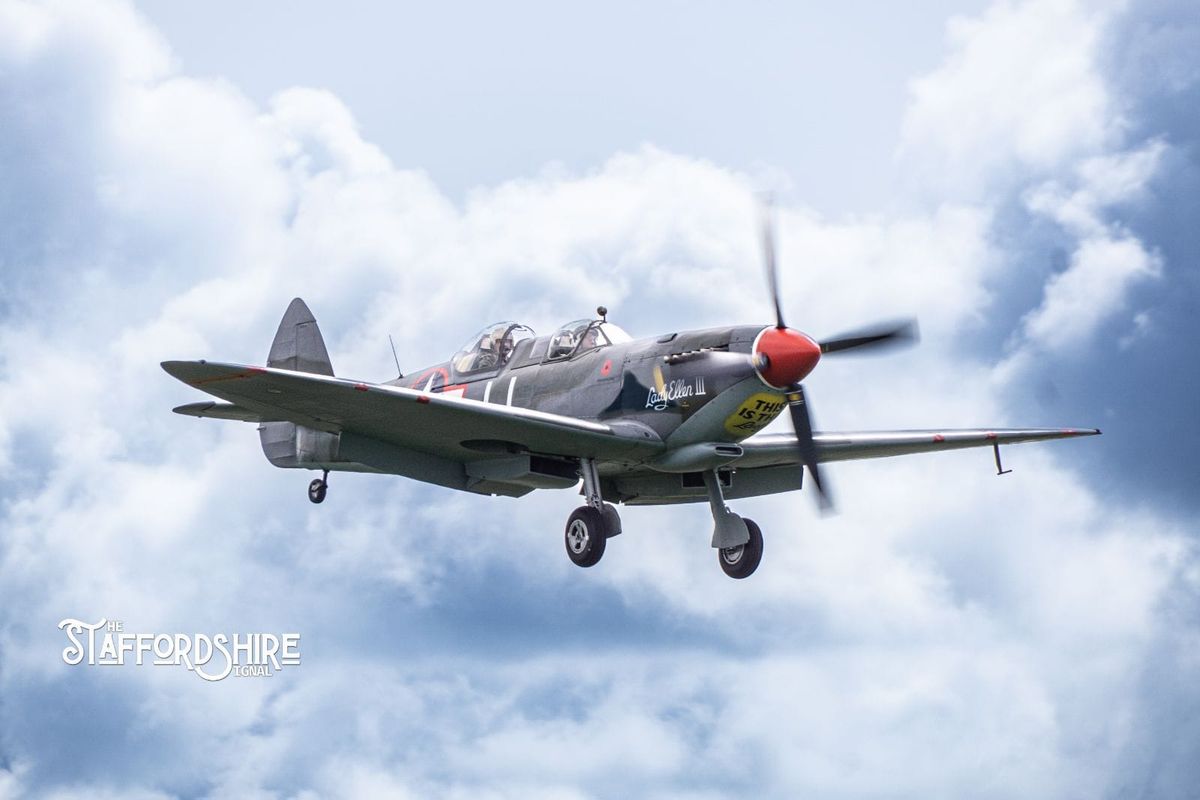
Very few aircraft designed in the 1930s still generate that sort of excitement. Perhaps that continuing fascination is part of the reason this latest project exists at all.
The Aerolite concept itself has roots in a little known chapter of wartime history. During 1940, concerns over dwindling aluminium supplies prompted investigations into alternative methods of constructing future Spitfires, including the possible use of a composite material called Gordon Aerolite for aircraft fuselages. Those plans were eventually shelved and never progressed further.
Now those forgotten proposals have been revived and reimagined using contemporary composite materials. According to the team behind the project, this approach has allowed them to revisit ideas that had remained untouched for decades while also creating what could potentially become the world's largest kit form aircraft.
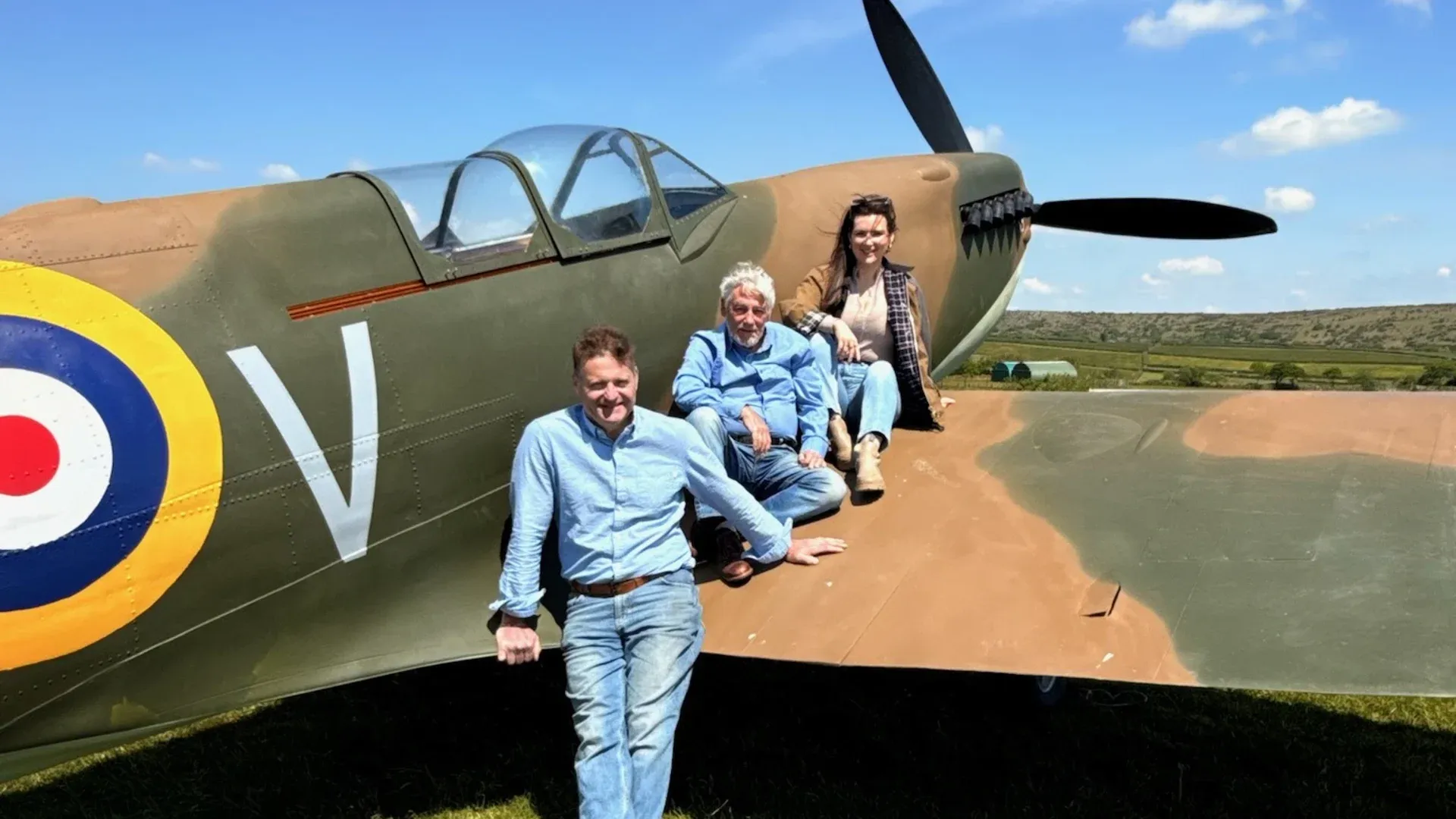
The concept model itself reportedly cost around £750,000 to develop, a figure considerably lower than the more than £3 million often required to purchase an original Spitfire. The aircraft's composite construction also means it is weather resistant and would not require traditional hangar storage in the same way as historic aircraft.
Jeremy Meeson, chief executive of Great British Supermarine Ltd, said:
“The moment is right to reimagine the Supermarine Spitfire because today’s materials, propulsion, and digital engineering finally let us evolve an icon without losing what made it exceptional."
The team is now expected to take the full scale concept model to air shows and military and classic vehicle events around Britain this spring and summer while gauging interest from enthusiasts and potential investors.

Spitfire Type 300. F 37/34. Circa 1936Reginald Mitchell completed the prototype Spitfire just a year before his death. This aeroplane was capable of 342 m.p.h. and was officially the fastest military aircraft of the time.This aircraft would ...View Full Resource on Staffordshire Past Track
Mitchell himself never lived to see the full impact of his creation. He died in 1937 at the age of 42, before the Spitfire became synonymous with the Battle of Britain and before it secured its place as one of the most admired aircraft in aviation history.
Nearly ninety years after its first flight, however, his work continues to do something remarkable. It still fills airfields, still turns heads and still inspires enough affection that people are not only preserving Spitfires, they are trying to build new ones.
For a young engineer from Staffordshire, that is a legacy few could ever have imagined.
Enjoyed this story?
The Staffordshire Signal is a not-for-profit, community-funded publication. Every tip helps keep local journalism free, independent, and focused on the stories that matter across Staffordshire.
Every contribution supports reporting, photography, and storytelling across the county.
Explore the heart of our county Use the interactive map above to discover local landmarks, heritage sites, and community-vetted spots. Every interaction helps support The Staffordshire Signal’s mission to keep local news free and independent.