


A new chapter is beginning for one of Staffordshire’s most remarkable historic homes, as entrepreneur Mo Chaudry and his wife Ann complete the purchase of Barlaston Hall.
Set within nine acres of land and accompanied by the deconsecrated St John the Baptist Church, the Grade I listed Georgian property has been acquired for an undisclosed fee, securing its long-term future.
The hall, previously on the market for around £3.5 million, has most recently been used as both a private residence and a venue for weddings and events. Now, it is set to become the Chaudry family home, with plans already in place to restore and enhance the estate, including the creation of a Georgian garden.
Completion of the purchase on 1 May, Staffordshire Day, carries added significance. The date also marks the founding of Josiah Wedgwood’s pottery company in 1759, a connection that reflects the hall’s deep historical ties to the Wedgwood estate in nearby Barlaston.
Mo Chaudry said: “We had no plans to move and were in the process of upgrading our current home, but the opportunity arose when a buyer for the Hall failed to proceed and the opportunity only knocks once! I am absolutely thrilled to be able to call Barlaston Hall our family home – it feels like everything has come full circle. To own such an incredible piece of Staffordshire history, which has deep ties to Wedgwood, is genuinely special. It’s especially poignant because my former business, Waterworld, was also on Wedgwood land. When I launched MOmentum Capital, it was with the hope of finding the Josiah Wedgwood of our time, someone whose vision and creativity can change the world. Completing this on Staffordshire Day, May 1st, feels like serendipity.”
He added: “This is a huge moment for me and our family but also an opportunity to preserve this beautiful building for the future. While it will be a private home for us, we also hope to allow people to enjoy the grounds and use the Church. The plans for how that will look are still at an early stage, but I am so excited for my family and to be able to preserve Barlaston Hall and the Church for generations to come."
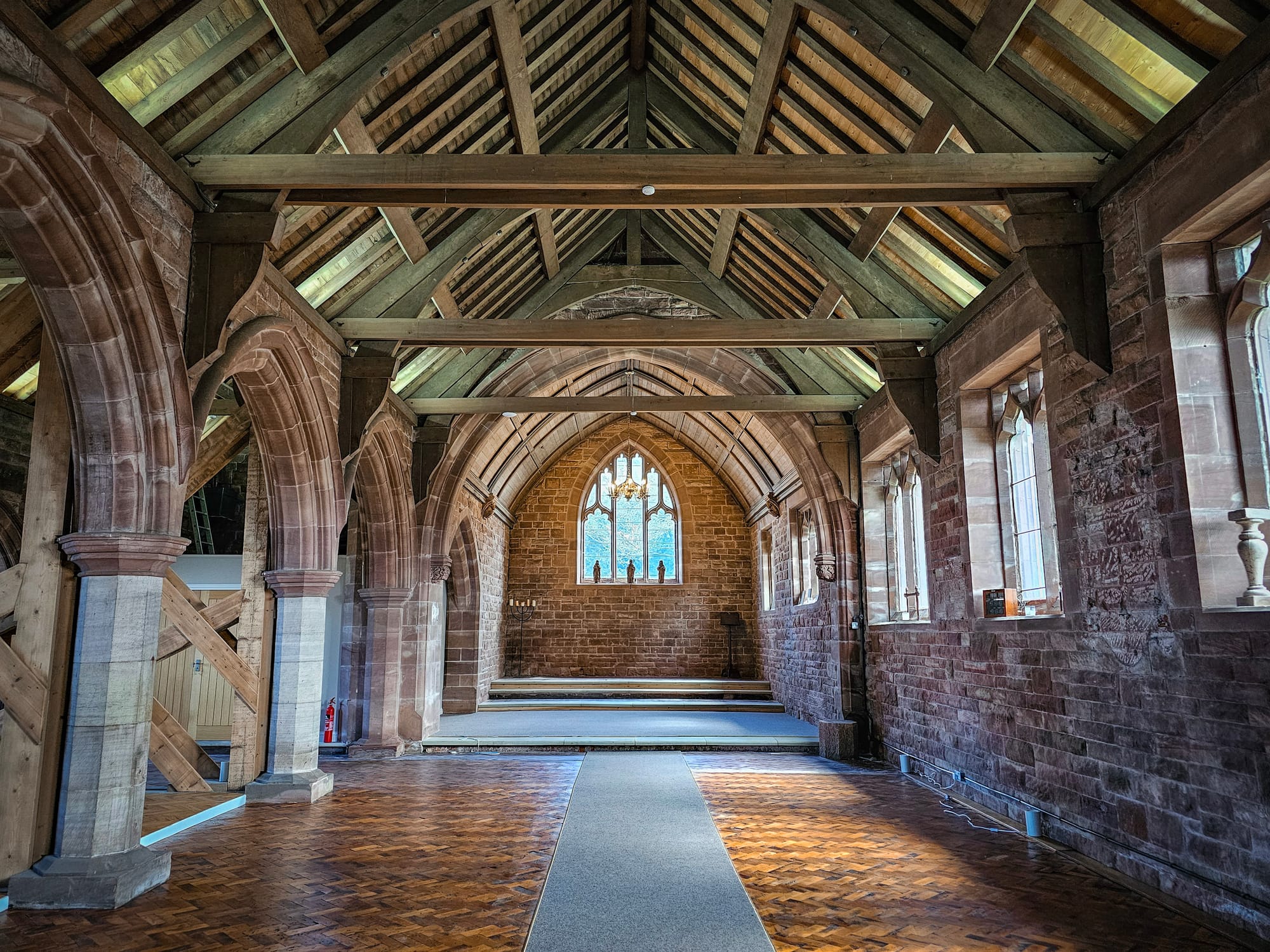
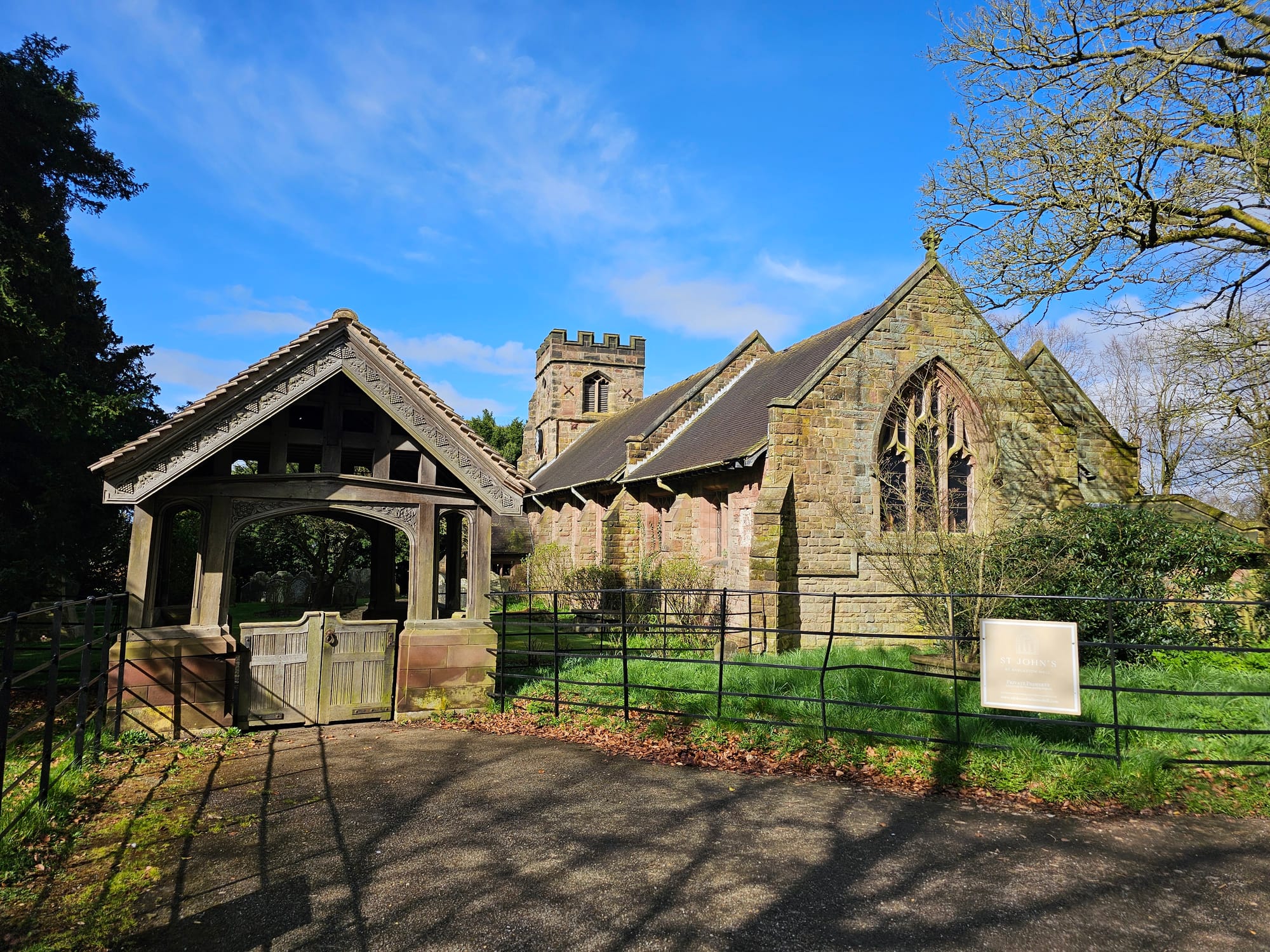
St. John's Church
As part of those early plans, weddings already booked for this year will be honoured, while there are ambitions to open the grounds to the public at certain times and host charity events. The church is also expected to become a community space for events and workshops.
Crispin Harris, Director of Jackson-Stops Alderley Edge, said: “Barlaston Hall is one of those exceptionally rare estates that speaks not just to architectural beauty, but to the resilience of Britain’s country house heritage. From its 18th-century Palladian origins, set at the heart of the Wedgwood estate, through to its remarkable restoration, it represents a truly important part of the UK’s historic landscape.
“Opportunities to acquire a property of this calibre are extraordinarily rare, and we are delighted to have found a custodian who recognises its significance and is committed to preserving and enhancing it for the future. It’s very much a continuation of the Barlaston Hall’s story, now entering an exciting new chapter.”

Barlaston Hall: sepia drawing'View of Barlaston Hall, Staffordshire,' showing a tall, three-storeyed house, with a classical front door (up 5 steps), wings with bay windows. Pediment top to front. artist: J. Buckler.View Full Resource on Staffordshire Past Track
A hall shaped by Staffordshire’s history
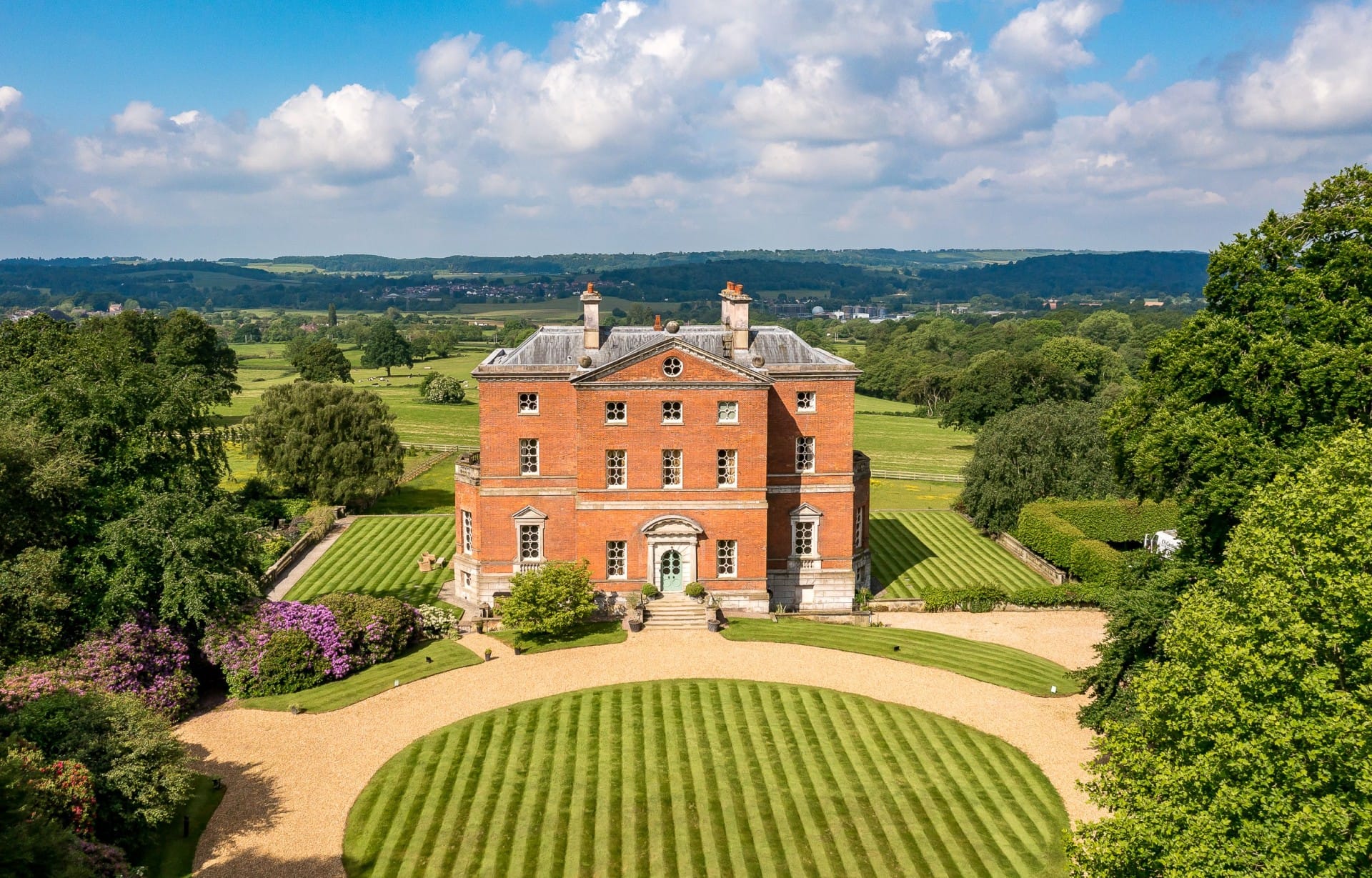
Barlaston Hall stands on a ridge overlooking the Trent Valley, just south of Stoke-on-Trent, and is widely regarded as one of the county’s finest surviving Georgian country houses.
Built between 1756 and 1758 for local attorney Thomas Mills, the hall was designed by Sir Robert Taylor, a leading architect of the Georgian period. Its red-brick exterior, Palladian symmetry, and distinctive sash windows with octagonal and diamond glazing reflect the refined architectural style of the time.
Inside, the house was designed around a central Doric hall, with elegant reception rooms and a striking staircase beneath a domed skylight, typical of the classical influences that defined Georgian design.
The estate later passed into the Adderley family before entering a new phase in 1937, when it was purchased by the Wedgwood pottery company. The acquisition formed part of a wider move by Wedgwood to relocate its operations from Etruria to Barlaston, shaping the village’s identity for generations.
During the Second World War, the hall was requisitioned by the War Office and used by British Army units. In the years that followed, it became home to the Wedgwood Memorial College, serving as a residential adult education centre from 1945.

Barlaston Hall under Repair,Barlaston Hall stands on a hill, overlooking the Trent Valley. It was built in 1756 for Thomas Mills, an attorney from Leek. The design is attributed to Sir Robert Taylor.In 1774 Barlaston Hall featured ...View Full Resource on Staffordshire Past Track
From near ruin to remarkable recovery
Despite its significance, Barlaston Hall came close to being lost forever.
By the late 1960s, the building had fallen into disrepair, suffering from vandalism, structural damage, and severe subsidence caused by historic coal mining and the fact that it had been built on a geological fault. 4 inch cracks opened in the walls, parts of the structure collapsed, and by the early 1980s the hall was considered at serious risk of demolition.
In 1981, the property was famously sold for just £1 to the conservation charity Save Britain’s Heritage, which led a complex and determined effort to rescue the building. Supported by engineers, heritage organisations, and funding bodies, the restoration included major structural work, including the installation of a concrete raft beneath the hall to stabilise it.
The external restoration was largely completed by the early 1990s, before the property returned to private ownership, where further work restored its interiors over several years.
Today, Barlaston Hall stands not only as an architectural landmark, but as a symbol of what can be achieved through preservation, investment, and care.
Looking ahead
The latest purchase marks another turning point in the hall’s long and varied story.
With plans to restore the building further, open parts of the estate to the public, and create opportunities for community use, there is a clear intention to balance private ownership with wider access and engagement.
For a building that has survived centuries of change, near collapse, and one of the most ambitious heritage rescue projects in the country, this next chapter offers both stability and renewed purpose.
As Staffordshire continues to celebrate its history and identity, Barlaston Hall remains firmly at the heart of that story.
Enjoyed this story?
The Staffordshire Signal is a not-for-profit, community-funded publication. Every tip helps keep local journalism free, independent, and focused on the stories that matter across Staffordshire.
Every contribution supports reporting, photography, and storytelling across the county.
Explore the heart of our county Use the interactive map above to discover local landmarks, heritage sites, and community-vetted spots. Every interaction helps support The Staffordshire Signal’s mission to keep local news free and independent.


