
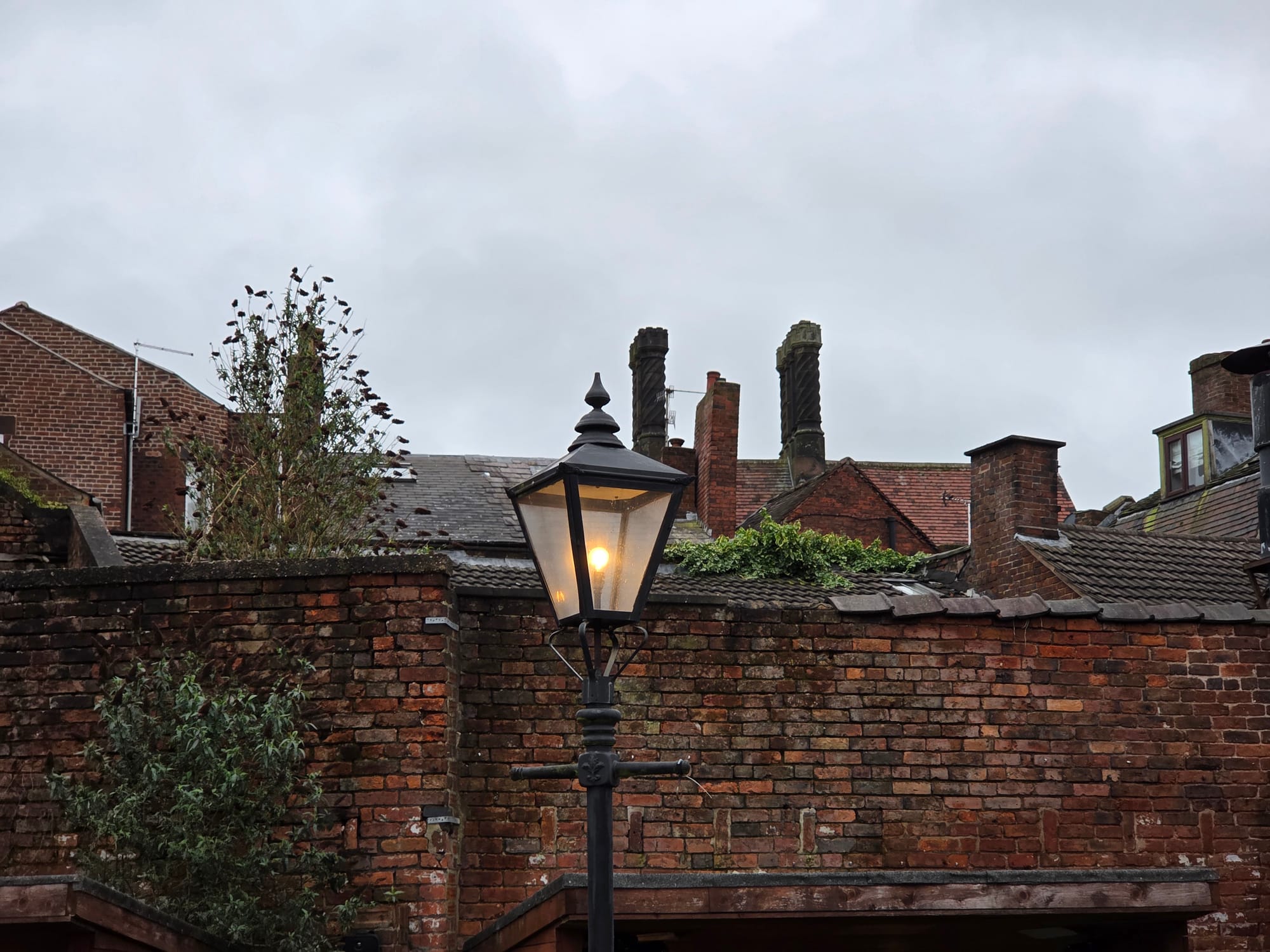
Next time you visit Leek in the Staffordshire Moorlands, look up.
You will soon start to notice the unusual chimney pots and towering chimney stacks that pepper the rooflines. Some of them are part of the architectural legacy of Sugden & Son, the architects who left their distinctive mark on the town during the nineteenth century.
When you ask visitors to Leek why they have come, you hear about the vibrant market days, with the newly refurbished indoor Butter Market adding to the appeal. They will also tell you about the excellent choice of independent shops and the friendliness of the locals they encounter.
But many also love to wander the quaint streets lined with old-fashioned shopfronts, pubs, churches, commercial premises and public buildings. The town’s architectural heritage is not always conventionally beautiful, but it is distinctive, characterful and unmistakably Leek. Much of it was shaped by the Sugdens.
William Sugden was a gritty, energetic Yorkshireman who arrived in the area in 1848 to supervise the construction of several stations on the new Churnet Valley Railway line nearby. He quickly recognised that Leek was expanding rapidly, with silk mills, houses and churches rising across the town and many more still to come.
Seeing opportunity, he established himself in Leek as an architect and surveyor.
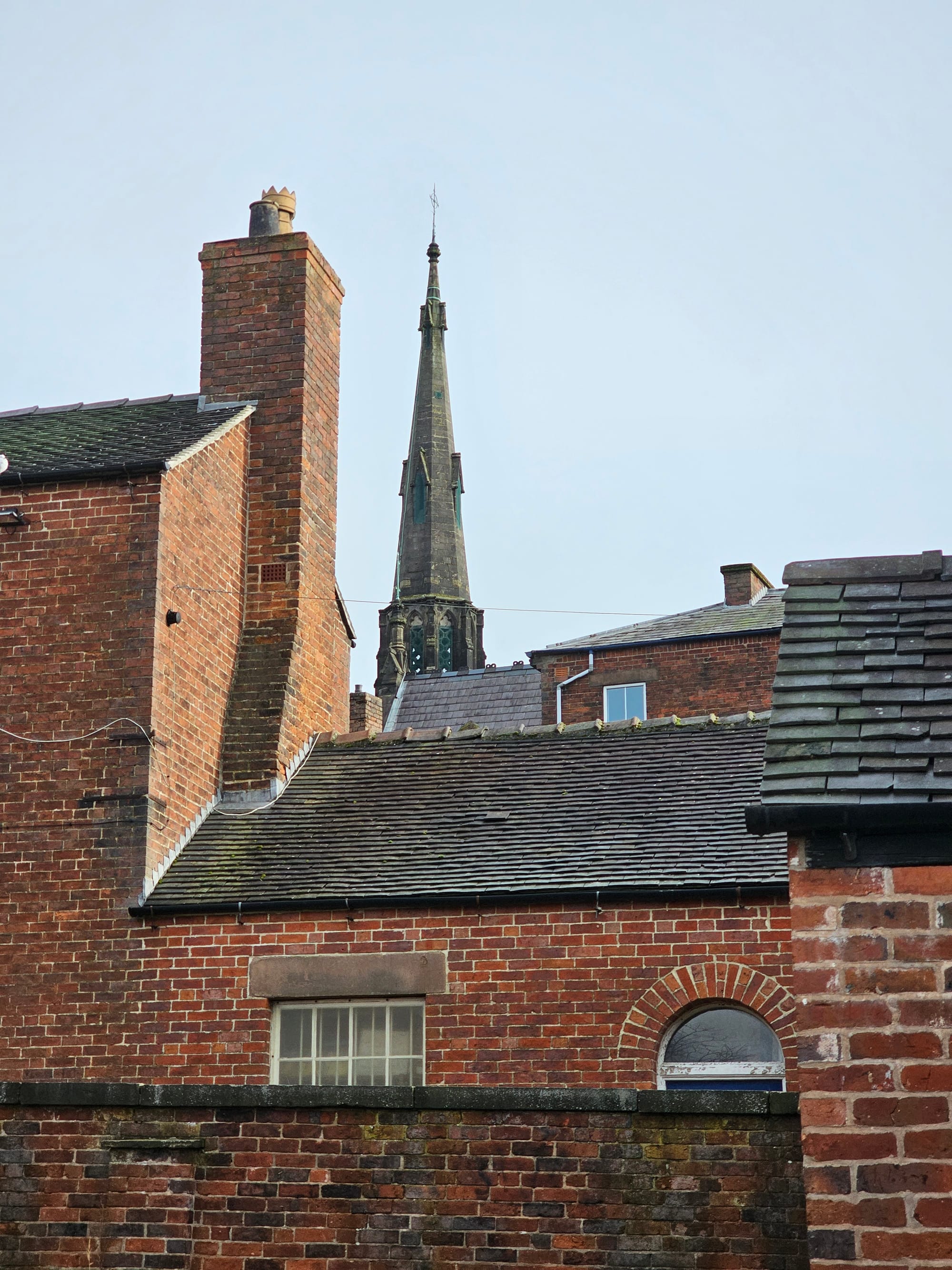
When it came to ecclesiastical work, Sugden followed the popular Gothic Revival style, harking back to medieval churches and cathedrals and strongly favoured by nineteenth-century church authorities. This could be seen in his designs for Brunswick Chapel, now demolished, the cemetery chapels and his impressive Congregational Church on Derby Street, now known as Trinity Church, inspired by the Gothic Decorated period.
Sugden’s secular buildings in Leek showed far greater variation and eclecticism. Above ground level he favoured rounded or arched windows and decorative brickwork, features that became hallmarks of his work after the 1850s.
Two examples in the town centre are the Mechanics’ Institute on Russell Street and the former Alsop Cottage Hospital on Stockwell Street. The use of brick banding helps elevate many of the town’s houses above the ordinary, particularly around Bath Street, Ford Street, York Street and Deansgate.
This decorative use of brickwork continued under his son after 1870, with William Larner Sugden adding moulded brick highlights to openings and ceramic tiles to doorways in some of his terraced housing commissions.
When his schooldays were over, William Larner Sugden joined his father in the business as a trainee. Work from the 1870s and 1880s was often jointly designed, with Larner introducing newer styles such as Queen Anne Revival and Arts and Crafts influences.
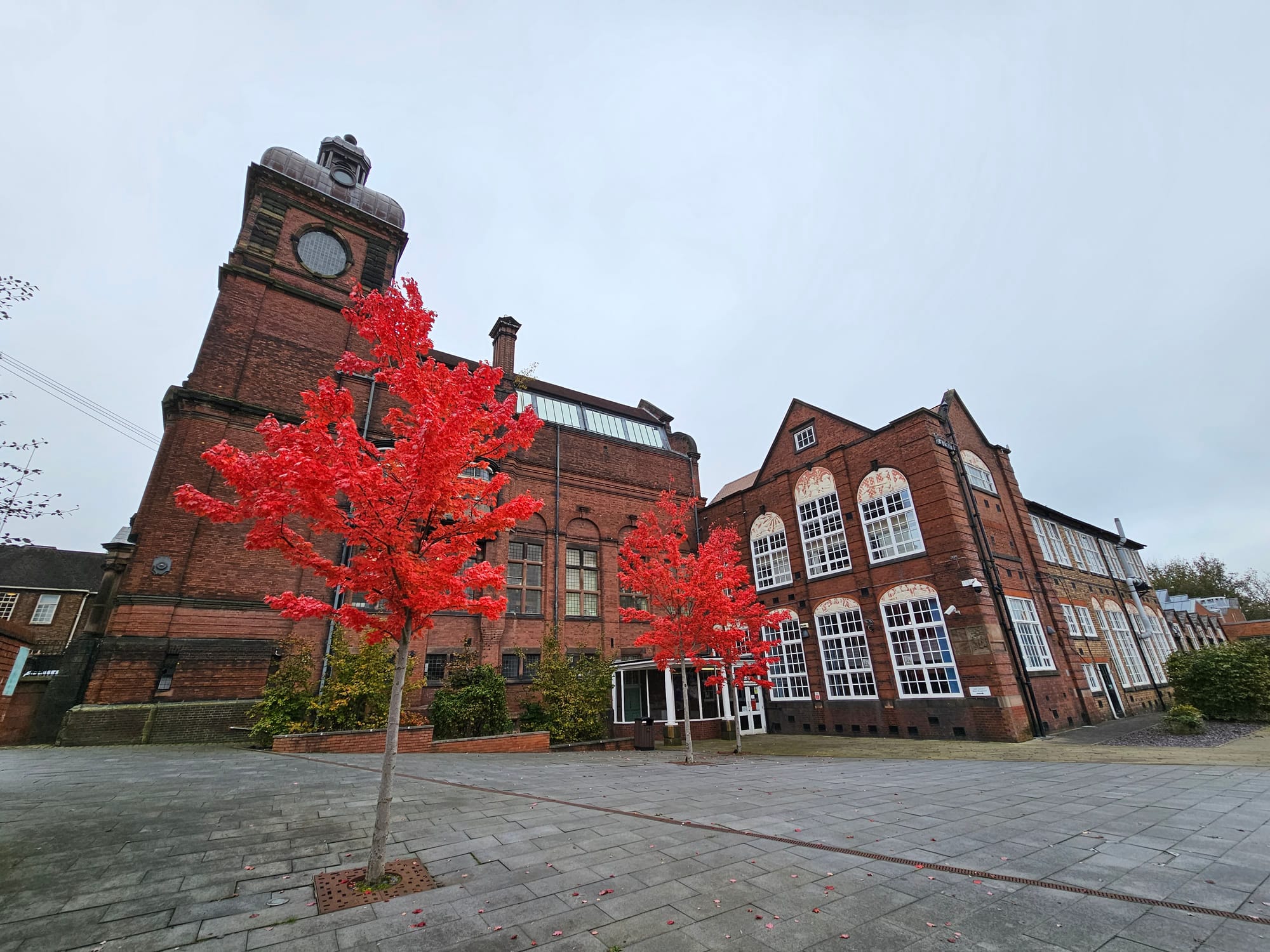
Their most celebrated collaboration remains the magnificent Nicholson Institute, completed in 1884 off Stockwell Street. It was conceived as a multi-purpose public building for the people of Leek by Joshua Nicholson, a wealthy silk manufacturer and philanthropist.
The result was a building that is striking and distinctive rather than conventionally beautiful, combining a Renaissance-style tower with Queen Anne gables and Arts and Crafts decorative features.

Old Police Station, LeekThe old Police Station on Leonard Street, Leek.This former County Police Station is a Grade II listed building dating from 1891-2, it was designed by local architects: the father and son practice of ...View Full Resource on Staffordshire Past Track
This willingness to borrow from multiple architectural styles can also be seen in the Old Police Station on Leonard Street, designed in a dramatic Scottish Baronial style. Why not? Its appearance certainly conveys strength and authority in abundance.
William Larner Sugden was also responsible for the striking bank on Derby Street built for the Manchester and Liverpool District Banking Company in 1882. Today it remains one of Leek’s finest buildings.
It is Grade II listed by Historic England and was recently vacated by NatWest, leading to concerns about its future.
The left-hand side has a flat, solid and beautifully crafted brick façade edged with stone, while the right side features an elegant gable with ornate oriel windows and decorative pargetting. The interior is equally lavish, with no expense spared, should you ever get the opportunity to step inside.
The Co-op’s former regional headquarters, located on the corner of High Street and Field Street, is another excellent example of Larner’s work.

Leek Battery leaving for France3rd Leek Battery passing William Sugden's Sanders Building, occupied at the time by J. Mears. On horseback is Lt. Arthur Falkner Nicholson, who was later wounded in action.View Full Resource on Staffordshire Past Track
Larner was also responsible for Sanders Buildings, the large commercial property on the corner of Derby Street and Haywood Street. It has a grand and well-balanced appearance, complete with an unexpected roof spire somewhat overshadowed by those massive square chimney stacks that the Sugdens simply could not resist.
And we must not forget Larner Sugden’s own house on nearby Queen Street, along with the neighbouring property built for his elderly father.
Stepped window surrounds, moulded brickwork, external terracotta tiles, early Arts and Crafts motifs and inevitably towering chimneys create a remarkable mixture of features that still divides opinion today.
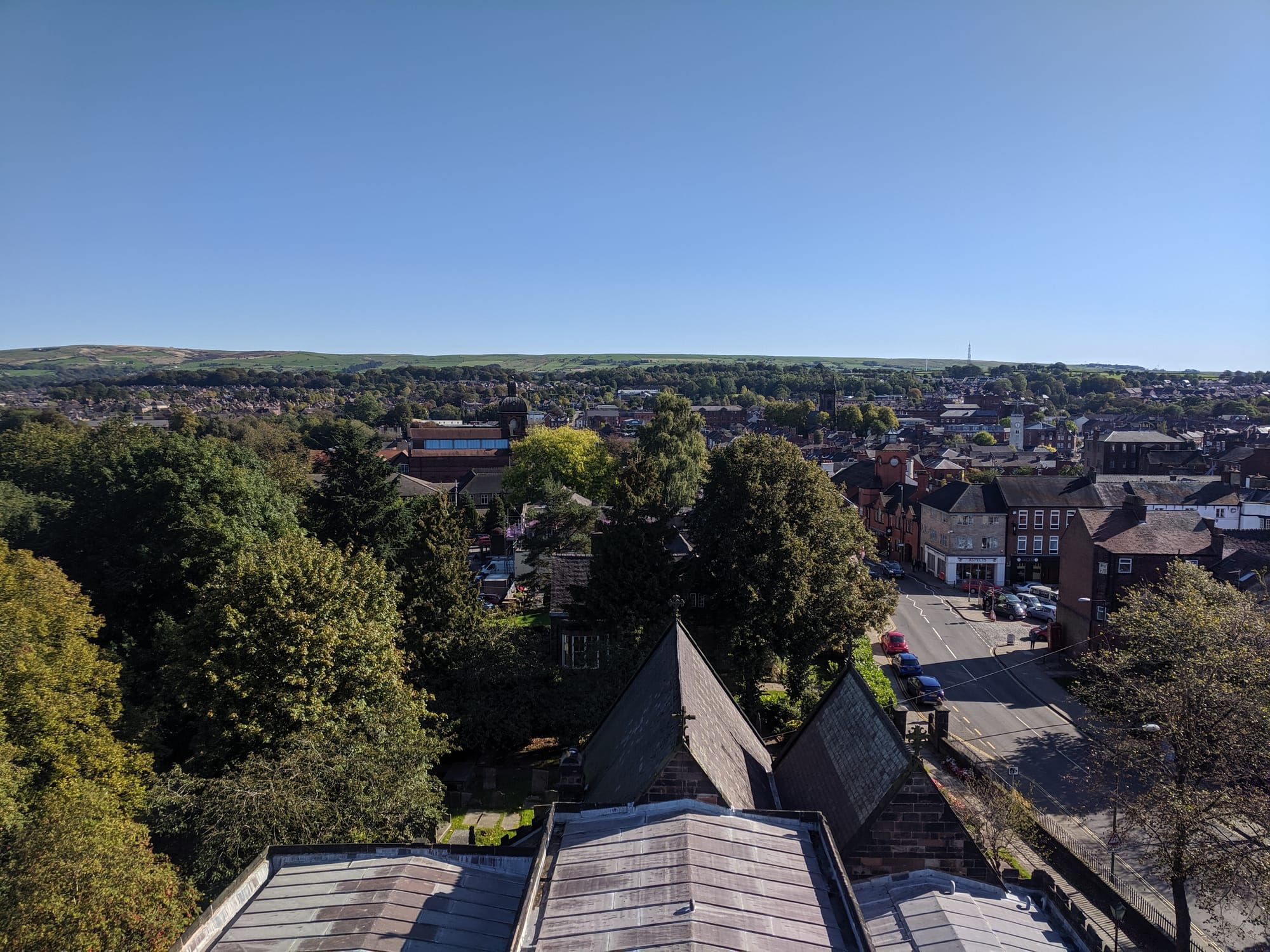
The streets of Leek remain distinctive and full of character. The Sugdens made a substantial contribution to how the town looks today, although they were certainly not responsible for all of it.
There are many other architectural delights to discover.
Any survey of Leek’s buildings should also include the beauty and diversity of St Edward’s Street. Admire the town’s own black-and-white timber buildings, like those that chocolate-box Cheshire is famous for, but do not forget to look upwards, because some of them have huge and wonderfully quirky chimneys of their own.
Enjoyed this story?
The Staffordshire Signal is a not-for-profit, community-funded publication. Every tip helps keep local journalism free, independent, and focused on the stories that matter across Staffordshire.
Every contribution supports reporting, photography, and storytelling across the county.
Explore the heart of our county Use the interactive map above to discover local landmarks, heritage sites, and community-vetted spots. Every interaction helps support The Staffordshire Signal’s mission to keep local news free and independent.