


The Ancient High House is one of 3 heritage and public attraction sites in Stafford currently owned and managed by Stafford Borough Council and Freedom Leisure, collectively known as Historic Stafford.
Izaak Walton’s Cottage, Stafford Castle and the Ancient High House all offer free, family friendly activities with an exciting programme of exhibitions, themed tours and workshops throughout the year.
Since their new ownership in 2017, the team of around 20 staff, plus volunteers have worked tirelessly to engage with the community to deliver some innovative and dynamic experiences, transforming traditionally static historic spaces into more vibrant, lively and appealing destinations, to attract much wider followers. Although history is at the heart of the organisation, increasing visitor numbers and transforming their identity has also been their main aim.
As some of these historic but beautiful buildings are not fully accessible to everyone, Olly is keen to highlight the significant work carried out over the past year to expand outreach services and develop new digital platforms. Enhanced visual and audio resources, online content, guided tours, and increased support from the front‑desk team have all helped the museum connect with a wider and more diverse audience. History is truly being brought to life in care homes and schools across the borough, as well as outside the Ancient High House and at Stafford Castle’s events for groups of visiting guests to promote Stafford’s history, all delivered in line with national curriculum guidance.
School tours at The Ancient High House continue to be in exceptionally high demand, attracting pupils primarily from primary schools and Year 7 groups across Chester, Dudley, Birmingham, Worcester, Walsall, and Staffordshire. The site is also welcoming a growing number of home-educated learners and students with special educational needs, with sessions often selling out rapidly as soon as they are advertised online.
What truly sets these visits apart is the team’s remarkable ability to ignite curiosity and immerse students in the sights, smells, stories, and daily life of the past. Their engaging approach consistently brings history to life in a way that resonates with young people of all backgrounds and learning styles. The guided tours are exceptional value for money enabling you to fully appreciate the history of each of the periods in time.
Cubs, Beavers, Scouts, Brownies, and girl guide groups are also frequent visitors to the sites, with sessions proving consistently popular throughout the year. Many of these groups actively contribute to the wider programme by hosting stalls at some of the larger events held across the three sites, strengthening community involvement and offering young people meaningful opportunities to participate.
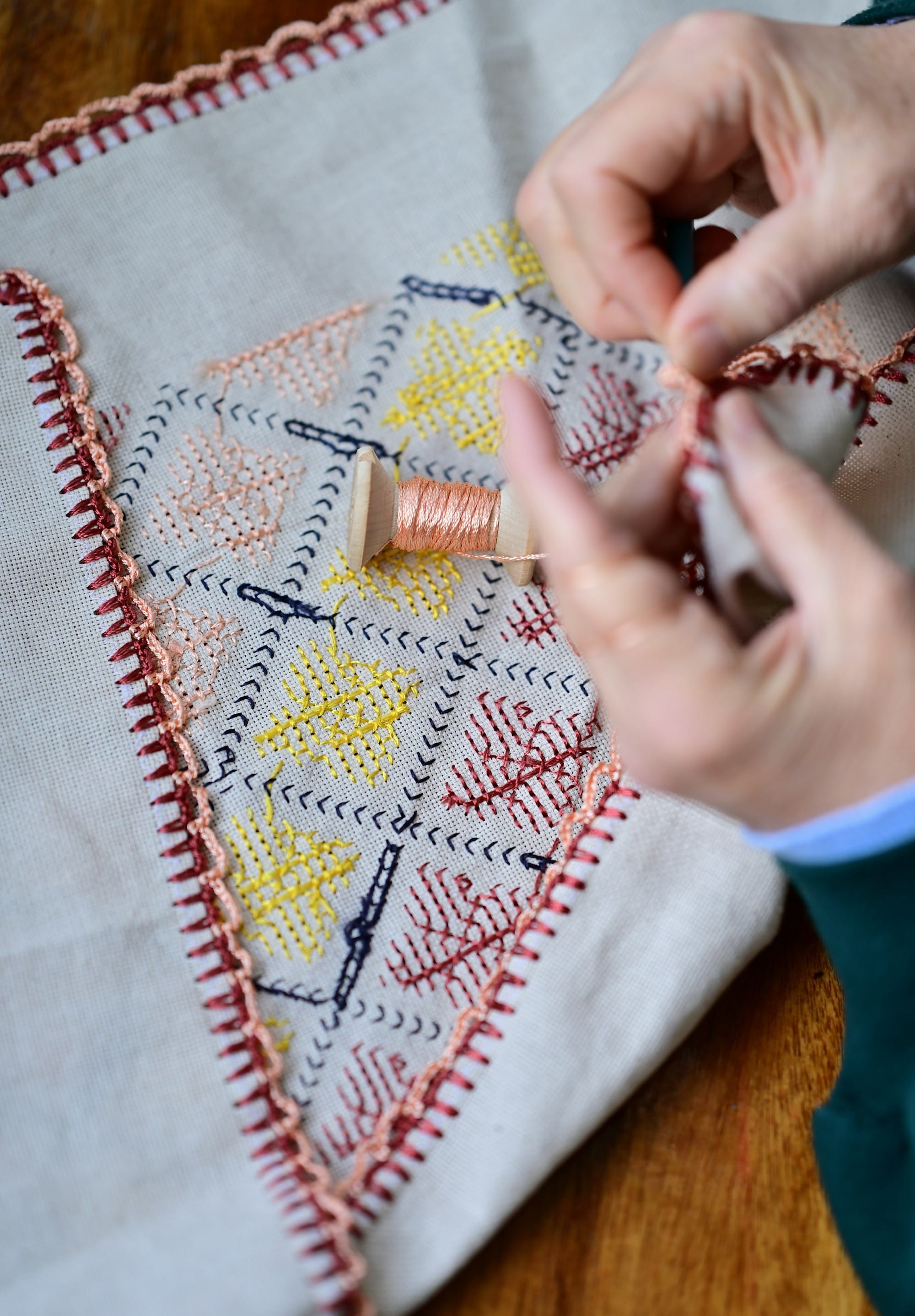
A wide range of adult and children’s craft workshops are also delivered throughout the year, primarily at The Ancient High House and Stafford Castle, in an attempt to bring people into the venues. These sessions offer a consistent, calm, and welcoming environment where individuals can explore creativity at their own pace. Volunteers play a vital role providing flexibility in these sessions, enabling a diverse range of activities to take place. The Christmas Wreath making is always a firm favourite for the festive period.
In addition, a weekly Crafts, Coffee and Catch‑Up session is held on the first Saturday of every month at the High House. This workshop provides a gentle and accessible space for social interaction. Participants regularly report that these sessions have had a positive impact on their wellbeing, helping to build confidence, reduce isolation, and encourage meaningful social connections.
The team are also receiving training in Makaton helping people with learning and communication difficulties to express themselves and understand others, boosting communication and speech skills. They are also participating in Dementia Friends Training, helping to raise awareness of people living with dementia and change perceptions to support those living with the condition.
All the staff at Historic Stafford are committed to creating a fully inclusive environment where everyone feels welcome and no one misses out. They’re actively building connections with a wide range of community groups and audiences, and while they recognise there is still more to do, they’re dedicated to continuous improvement and meaningful progress.
Having recently moved to Stafford, I’ve often passed the old Tudor building on the high street and admired its grandeur, without ever realising its purpose or the story behind it. After finally stepping inside during the recent ‘Story Book Trail’ event, I can now fully appreciate its significance and historical value. I can wholeheartedly recommend a visit to anyone who wants to appreciate its true historical heritage.
Although the trail occupied only a small section of each room, it sparked lively discussion among visitors as they followed clues to uncover five themed scenes inspired by much‑loved children’s books. A separate mouse trail was also taking place for younger children encouraging them to explore the period rooms in search of hidden mice, guided by a series of tailored questions. These free, family‑friendly activities are playing an important role in ensuring the site remains a vibrant and engaging community hub.
What really struck me however during my visit was the deep sense of history within the house itself, with each room reflecting a distinct era- from the Tudor and Elizabethan periods to the Stuart, Victorian, and Edwardian ages, with period furniture taking pride of place. Although few of its many occupants left extensive records, enough evidence survives to piece together the story of the house and the lives of some of the people who called it home. Over the centuries, the building has served many purposes and up until the late 1960’s the Ancient High House played a significant role in Stafford’s past.
The Ancient High House, originally built around 1595, for Richard Dorrington, a prosperous wool and cloth merchant, still stands proudly on Stafford’s Greengate Street at the heart of the town centre today. Widely regarded as one of the largest surviving timber‑framed townhouses of its kind, it’s among the finest Tudor buildings remaining in England. It continues to dominate the streetscape with its striking architectural presence.
Originally constructed for the influential Dorrington family, the house showcases distinctive Tudor craftsmanship with its heavy oak timber framing, wattle‑and‑daub panels, leaded multi‑paned casement windows, narrow street frontage, pitched roofing, and upper jettying floors. Its elegant E‑shaped floor plan and well‑preserved period features reflect the symmetry, status, and grandeur associated with wealthy homes of this era.
Royalty was welcomed to the house in 1642 when King Charles I and Prince Rupert (his cousin) stayed for 2 nights as they travelled enroute to Shrewsbury, just before the battle of Edgehill, using it as a temporary headquarters. Today, their visit is commemorated in the dedicated Civil War Room. In 1643 the house was used as an open prison housing royalist prisoners during the English Civil War. Rather than using traditional dungeons, the prisoners of war were held in rooms with relative comfort.
Captain Richard Sneyd a Royalist supporter purchased the house in 1639. Following his death in 1683, the house passed to his daughter Anne, who had then married Dr Edward Wetenhall. In 1733, it was inherited by John Hawkins, the son‑in‑law of Richard Wetenhall and the grandson of the renowned writer Izaak Walton.
In 1759, the house was purchased by Brooke Crutchley, a local pharmacist and Mayor of Stafford. After his death in 1777, the property was divided into two. In 1781, Dr Thomas Fowler, physician to the Staffordshire General Infirmary, married Crutchley’s widow and lived in the house until 1792. He developed “Fowlers Solution” an arsenic based medicine used to treat various ailments including headaches, malaria, syphilis, anaemia, skin conditions and chronic leukaemia, which was popular from the late 18th Century to the mid-20th Century. He was a well- known physician in Stafford at that time and used the house to see some private patients.
In 1792 the property was sold again to William Fieldhouse, a surgeon, for £320. Fieldhouse died in 1803, and his widow continued to occupy part of the building until 1822, as the large house struggled to sell leading to its repurposing.
By 1811, a portion of the house was being used as a boarding school for young ladies. In 1822, it was let to Thomas Feynhouse and his wife, who subsequently took over the running of the school. The whole property was sold again in 1825 to Henry Jenkinson, a local hairdresser and perfumier, specialising in personal grooming products, for £1,575, where he undertook significant renovations of his own.
In 1827, John Marson established a business on the premises as a grocer, tea dealer, and coffee roaster and also acted as Mayor of Stafford. During the 1830s, he purchased the entire house for £2,500 and created three shops on the ground floor. In 1876, William Albert Marson (son) took over the family business and developed it into a high‑class grocery establishment. New shop fronts -glass windows were installed in 1885.
The house was later sold to Richard Young in 1908. Throughout the 20th century, three shops continued to operate on the ground floor, while the upper floors accommodated a variety of businesses, including a hairdressers, a chiropodists, student accommodation, and bedrooms associated with the Swan Hotel.
Between 1975 and 1985, the High House underwent extensive restoration carried out by Stafford Borough Council and this history is showcased within the Castle room. In 1986, it reopened to the public as a museum and Tourist Information Centre. The Staffordshire Yeomanry Regimental Museum was established in the attic in 1995 and displays an extensive collection of military uniforms, firearms, equipment and memorabilia with over 200 years of military history. The Tourist Information Centre was later relocated in 2000.
The Ancient House is currently open to visitors from Tuesday- Saturday 10-4pm and runs an extensive calendar of events, along with Stafford Castle and Izaak’s Walton’s Cottage. The Wildlife at the Castle, Viking Re-Enactment, Haunted High House Week and Christmas Through The Ages are really popular events that bring large crowds of up to 4000 people. Please see the website www.historicstafford.co.uk for more details.
Just as a note to potential visitors-specific attention is given to supporting neurodiverse individuals and the Ancient High House in particular offers a quiet and tranquil place, which can be helpful for people experiencing sensory difficulties. It is worth mentioning that the Ancient High House is not accessible for wheelchair users and can also be quite restrictive for people with limited mobility, due to the age of the building and number of steps, including stepped access to enter the building. Staff Should you have any queries or concerns contact the team directly on 01785 619131 before visiting.
The majority of the events and activities are free and not restricted, but at some larger events parking charges may apply and costs where they are incurred are kept to a minimum.
There really is plenty to get involved with, so please visit Historic Stafford and these events as you may also learn some historic facts along the way.
Join The Staffordshire Signal on WhatsApp
Never miss a single breaking update, local news story, community event, or deep dive. See everything happening in Staffordshire first, straight to your phone!
Get Instant UpdatesExplore the heart of our county Use the interactive map above to discover local landmarks, heritage sites, and community-vetted spots. Every interaction helps support The Staffordshire Signal’s mission to keep local news free and independent.

Enjoyed this story?
The Staffordshire Signal is a not-for-profit, community-funded publication. Every tip helps keep local journalism free, independent, and focused on the stories that matter across Staffordshire.
Every contribution supports reporting, photography, and storytelling across the county.


