

For decades, the former Tunstall Library, Public Baths and Drill Hall have stood as proud reminders of Tunstall’s industrial past. Their distinctive red-brick facades still dominate Tower Square, but behind the impressive Victorian architecture lies a collection of Grade II listed buildings that have become increasingly vulnerable to neglect, vandalism and the weathering of time.
Now, after years of uncertainty, Stoke-on-Trent City Council's Planning Committee is preparing to decide whether one of the largest regeneration proposals Tunstall has seen in years should be given the green light, while the officers recommendation has been to refuse the application.
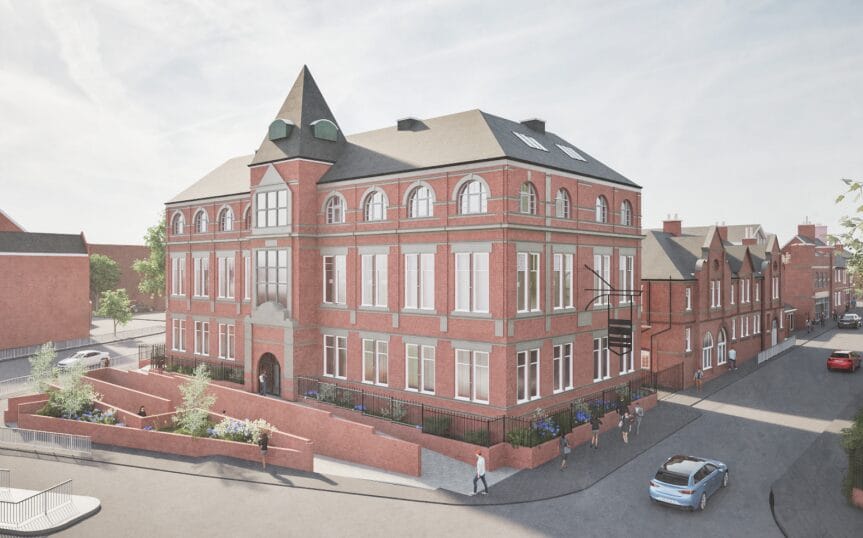
The application, submitted by Tunstall Library Developments Ltd, would transform the vacant buildings into a mixed-use development combining heritage restoration with new homes, leisure facilities and commercial space. The proposals include 39 apartments, a public café, restaurant and rooftop bar, a spa and wellbeing facilities within the former baths building, gym and dance studio space, alongside new landscaped public areas intended to reconnect the complex with the surrounding town centre.
Rather than replacing the historic buildings, the scheme centres on restoring them.
Developers say extensive work has already taken place behind the scenes to make redevelopment possible, including assembling land required for the project and relocating an electricity substation that had prevented earlier proposals from progressing. According to the development team, significant private investment has now been secured alongside £3.5 million of public funding, creating what they describe as a rare opportunity to safeguard the long-term future of the site.
Their message is clear: if this opportunity is missed, another may not come along.
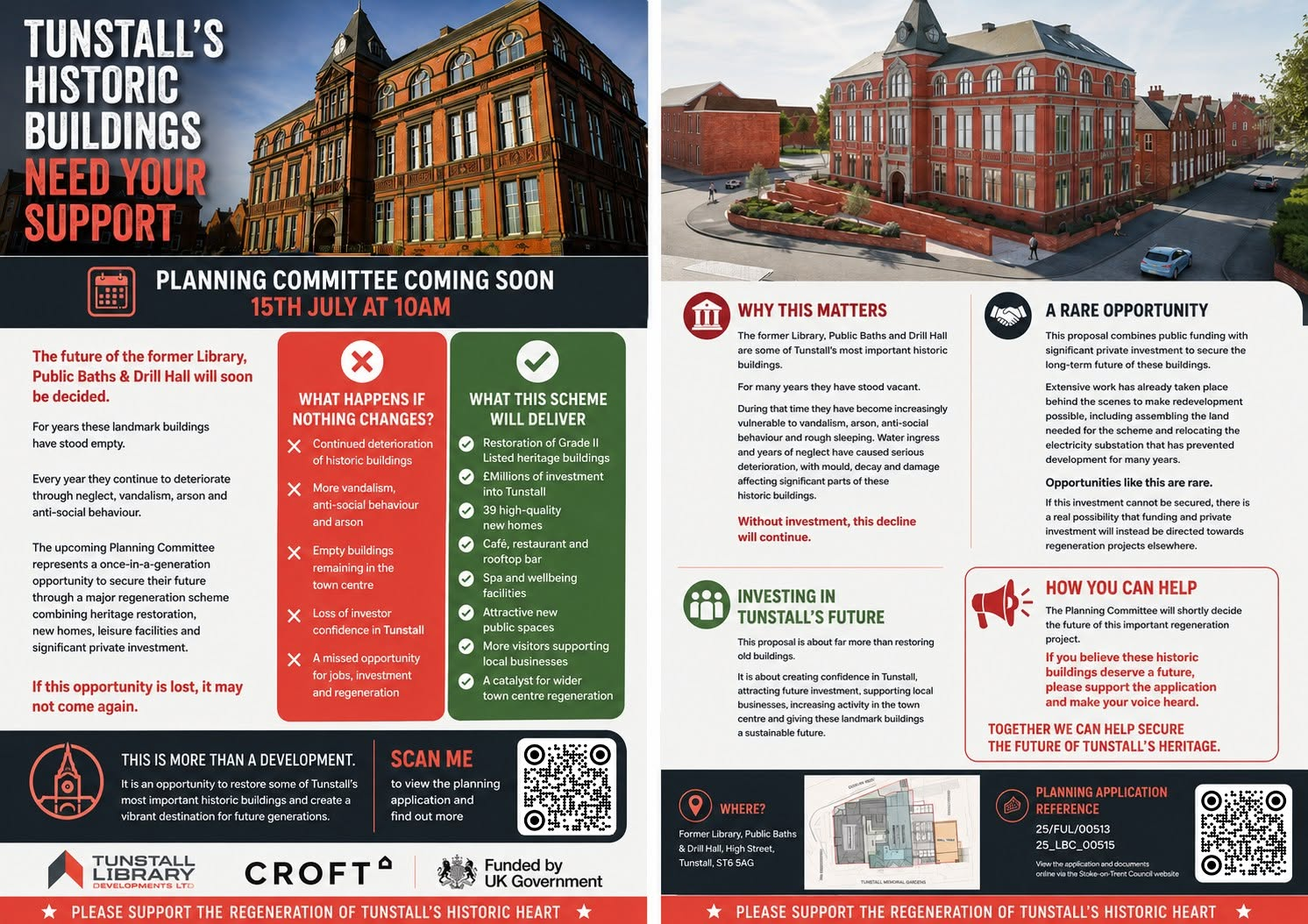
In information released ahead of the planning decision, the developers argue that doing nothing would almost certainly see the buildings continue their gradual decline. They point to years of vandalism, anti-social behaviour, water ingress and deterioration, warning that the complex will become increasingly expensive to restore the longer it remains vacant.
The leaflet also argues that failure to secure planning permission could have wider consequences beyond the buildings themselves. It suggests investor confidence in Tunstall could suffer, vacant landmark buildings would remain at the heart of the town centre, and the chance to bring millions of pounds of investment, new residents and increased visitor numbers into the area could be lost.
By contrast, supporters of the scheme believe it could act as a catalyst for wider regeneration.
Alongside preserving important heritage assets, they argue the development would create new homes, attract additional footfall for existing businesses, introduce leisure uses that are currently absent from the town centre and help restore confidence that investment in Tunstall is possible. The restoration of the former library and baths, they say, would not simply preserve history but provide the foundations for a more sustainable future.
It is an argument that reflects a wider challenge facing many towns across Staffordshire: how historic buildings can be preserved when restoration costs far exceed what traditional commercial uses can support.
However, like many major regeneration proposals involving listed buildings, the application has not progressed without challenge.
Planning officers and consultees have examined a wide range of technical matters, including the impact on the listed buildings themselves, parking provision, highways, residential viability and the overall design of the development. As with many significant planning applications, councillors must weigh the public benefits of regeneration against any harm to heritage assets and decide whether the proposals represent an appropriate future for one of the city's most recognisable Victorian landmarks.
The site, which was formerly known as the Victoria Institute and Public Baths, was constructed in 1889, and designed by local architect Absalom Reade Wood. It stands as an iconic landmark to both Tunstall and the city as a whole, providing generations with a facility to learn, read and swim.
Developers are now making a final appeal before councillors reach their decision. They will be in Tower Square on Saturday 11 July, inviting residents to view the proposals, ask questions and discuss the plans with members of the team ahead of the Planning Committee meeting.
Whatever councillors decide, the outcome is likely to shape Tunstall's town centre for decades to come.
If permission is granted, work could finally begin on breathing new life into buildings that have sat empty for years.
If it is refused, the future becomes far less certain. The buildings would remain vacant while an alternative solution is sought, with no guarantee another scheme capable of funding their restoration will emerge. As the developers themselves argue, opportunities to combine substantial private investment with public funding for heritage-led regeneration are rare - and they believe this may be the best chance these historic buildings have to secure a future.
Enjoyed this story?
The Staffordshire Signal is a not-for-profit, community-funded publication. Every tip helps keep local journalism free, independent, and focused on the stories that matter across Staffordshire.
Every contribution supports reporting, photography, and storytelling across the county.
Join The Staffordshire Signal on WhatsApp
Never miss a single breaking update, local news story, community event, or deep dive. See everything happening in Staffordshire first, straight to your phone!
Get Instant Updates