
There was disappointment across Staffordshire on Thursday evening after seven ambitious bids to become the UK's first Town of Culture failed to reach the national shortlist.
Longton, Leek, Newcastle under Lyme, Stafford, Burton upon Trent, Burntwood and Tamworth were among almost 400 towns from across the country hoping to secure the prestigious title for 2028. Instead, the Government selected 15 towns to progress to the next stage, where they will each receive £60,000 to develop full applications before one overall winner is awarded a £3 million grant next year.
Although the news marks the end of the competition for Staffordshire's hopefuls, the bids themselves painted a picture of a county proud of its history and determined to use culture as a propellant for its regeneration.
Longton's bid celebrated one of the six towns that built Stoke on Trent's international reputation. Rooted in its world famous pottery industry, the proposal showcased a growing creative sector, public art, independent cultural organisations (such as Urban Wilderness CIC) and a programme of festivals and events that have helped breathe new life into the town in recent years. Supporters hoped national recognition would build on ongoing regeneration work and encourage further investment into the south of the city.
Leek's bid drew on the Moorlands' artistic heritage and independent identity. From its links to the Arts and Crafts movement through William Morris, to its thriving markets, festivals, galleries and volunteer led cultural organisations, supporters hoped Leek's creativity and community spirit would capture the judges' attention. Residents and local organisations were encouraged to help shape the bid, reflecting the collaborative approach that has become a hallmark of the town's cultural life.
Nearby Burntwood also entered the running, with a bid built around community spirit rather than headline landmarks. The town's submission highlighted its choirs, creative projects, free community events and its mining heritage, with Burntwood Town Council keen to show that a town best known for its size and community groups could hold its own on the national stage.
Just a few miles away, Newcastle under Lyme's submission focused on a different story. The borough highlighted its 850 years of history, award winning Brampton Museum, the nationally recognised New Vic Theatre, Apedale Heritage Centre and a strong tradition of civic pride. Council leaders argued that Newcastle combined historic character with a thriving cultural scene and saw the competition as an opportunity to showcase a town that often sits in the shadow of its larger neighbours.
Meanwhile, Stafford's application centred on the county town's heritage, history and exciting projects of revitalisation. With its medieval past, landmarks and expanding calendar of festivals, the bid aimed to demonstrate how culture already plays a central role in the town while highlighting opportunities for future growth.
Burton upon Trent's bid was built on its brewing heritage and a wave of recent momentum. Backed by East Staffordshire Borough Council, the submission pointed to the growing success of the Sonic Boom Festival, the enhanced Washlands nature site, and plans to transform the Old Brewery Quarter into a major heritage destination, all framed as evidence that culture already sits at the heart of the town's community.
Tamworth rounded out the county's entries, drawing on its own deep well of history as the ancient capital of Mercia, home to Tamworth Castle and centuries of Anglo-Saxon heritage, alongside its modern day identity as a family and leisure destination. The bid put Tamworth forward as a town with a story stretching back well over a thousand years, still finding new ways to bring people together today.
While none of the seven bids progressed, their ambitions mirror the purpose of the Government's new Town of Culture programme: using culture to restore pride in towns, encourage investment, strengthen local identity and create lasting economic benefits.
For Staffordshire, the competition may be over, but the conversations it has sparked are unlikely to end here. Anyone living in these towns knows what deserving candidates they would have made, and their bids have truly showcased what is possible when a community comes together for a shared objective.
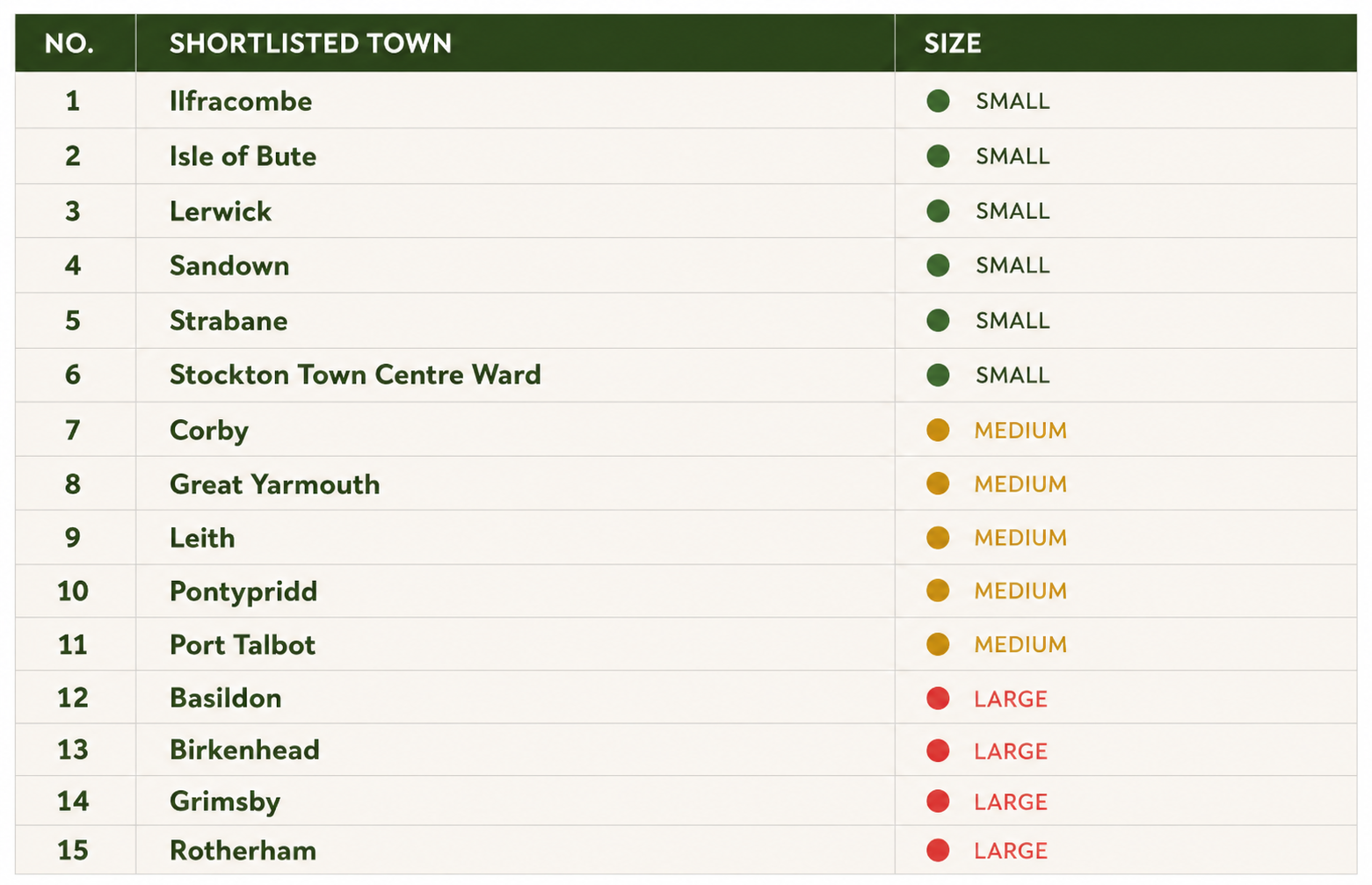
For anyone interested in who did make the shortlist, you can find the 15 towns below:
Enjoyed this story?
The Staffordshire Signal is a not-for-profit, community-funded publication. Every tip helps keep local journalism free, independent, and focused on the stories that matter across Staffordshire.
Every contribution supports reporting, photography, and storytelling across the county.
Join The Staffordshire Signal on WhatsApp
Never miss a single breaking update, local news story, community event, or deep dive. See everything happening in Staffordshire first, straight to your phone!
Get Instant Updates