


Born in December 1923, Kathleen has lived through a century of extraordinary change. From growing up in a terraced house on Sun Street, Shelton, through wartime bombing raids, dance hall romances and a lifetime in Stoke-on-Trent's famous pottery industry, her memories paint a vivid picture of a world now long gone.
Kathleen was the youngest of eight children - three girls and five boys. Her father, William Oliver, worked down the pits, while her mother Emily stayed at home caring for the family. Life changed dramatically when Kathleen was just eight years old, her father died suddenly, leaving her mother to bring up the family on her own.
Money was scarce, but family life was rich in community spirit. Like many children of her generation, Kathleen spent much of her childhood playing in the streets with her siblings and neighbours, especially enjoying skipping games.
As a child, Kathleen attended Shelton Infant School before moving to Wolf Lane Secondary School at the age of eleven. She particularly enjoyed exercise at school and enjoyed playing in the school yard. She remembered having a broad range of education but the curriculum in those days focused mainly on preparing girls for the practicalities of life. Alongside traditional lessons, she learned cooking, sewing, housework and domestic skills and also attended Stoke Cookery College, where she developed a lifelong love of baking. She left school at the age of fourteen and started work just two days later. Her first wage was four shillings a week, which she handed over to her mother. In return she received sixpence pocket money, which she carefully saved to fund her passion for ballroom dancing and dressmaking.
Kathleen loved making her own clothes and would visit Abakhan Fabrics in Hanley for all her materials, yarns, haberdashery and craft supplies, before sewing garments herself. Her interest in dressmaking, knitting and creativity remained with her throughout her life.
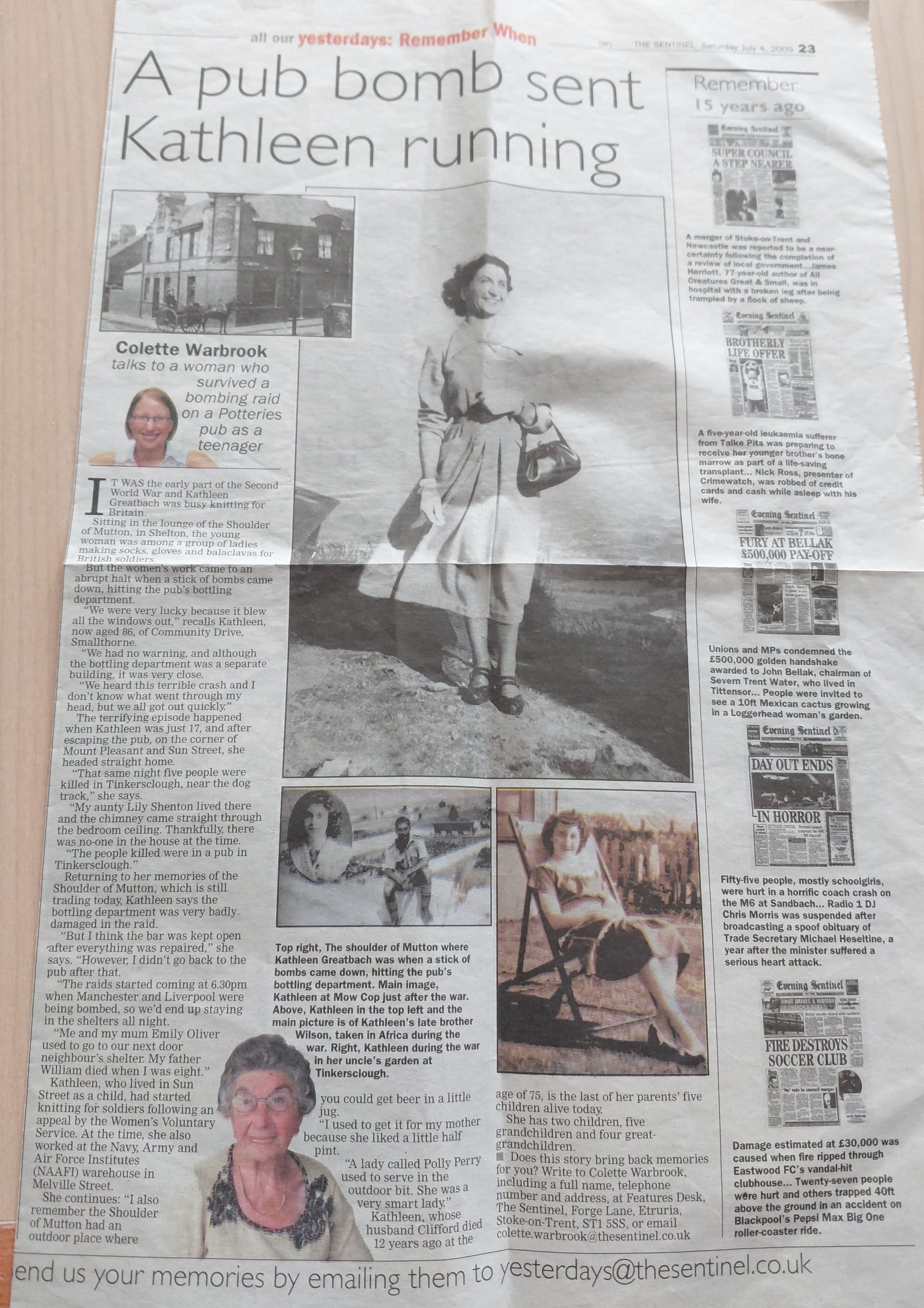
When war broke out in 1939, Kathleen was sixteen years old. She vividly remembers being in the lounge of the Shoulder of Mutton public house on Sun Street, Shelton, knitting socks, gloves and balaclavas for British soldiers following an appeal by the Women's Voluntary Service. At the time she was also working at the NAAFI warehouse on Melville Street.
One evening, while she and a group of ladies were knitting, a cluster of bombs fell nearby, severely damaging the pub's bottling department. The blast blew out the windows and Kathleen was struck by debris, fortunately she was not seriously injured. With no warning, everyone quickly escaped and Kathleen made her way home. That same night, five people were killed in Tinkersclough, near the dog track, including residents living close to her Aunt Lily Shenton, whose chimney crashed through her bedroom ceiling during the raid.
As bombing raids intensified, Kathleen and her mother often spent nights sheltering with neighbours. She remembered the raids beginning around 6.30 pm as enemy aircraft headed towards Manchester and Liverpool. The war years taught endurance, but they also reinforced the importance of community, friendship and making the most of every day.
Despite the hardships of wartime, dancing remained one of Kathleen's greatest passions. She attended many of Stoke-on-Trent's famous dance halls, including The Arcade, The Majestic, The Rialto Ballroom, Queens Hall and the ballroom at Trentham Gardens. She often walked four miles from Shelton to Trentham Gardens and then made the journey home after dances finished at 1.00 am. The roads were so quiet that she often walked in the middle of them on her way home.
Kathleen especially remembered the popularity of Trentham Gardens Ballroom during the 1940s. It attracted famous dance bands, including the Victor Sylvester Ballroom Orchestra, and became a social centre for thousands of local people.
It was through ballroom dancing that Kathleen met the man she would marry. Reflecting on their meeting, she often said that she "fell in love with his dancing." Although she had been dancing for years before they met, their shared interest brought them together. In 1951, aged thirty, Kathleen married Clifford at Shelton Church, where she had worshipped since the age of five and where she attended Sunday School and Holy Communion. Her strong Christian faith has remained an important part of her life.
Following their marriage, Kathleen moved into her husband's family home on Barber Road, Chell, where she lived with Clifford and her mother-in-law. Although she contributed financially to the household, she found the arrangement difficult and felt she was not allowed to have anything of her own and never felt fully accepted. Yet Kathleen carried on with the resilience that would become a hallmark of her character. In later years Clifford suffered a stroke at home and subsequently died in hospital at the age of seventy-five.
Throughout her working life Kathleen demonstrated a remarkable work ethic. She spent twenty years employed by H&R Johnson, where she worked as a sprayer of bathroom fittings. Training was minimal, and she learned her trade largely through experience and determination.
She later joined Grimwades, one of Stoke-on-Trent's renowned pottery manufacturers and makers of Bone China and Royal Winton Ware. She worked for twenty -six years as a paintress, hand decorating decorative patterns onto tea sets and tableware, until her compulsory retirement at the age of sixty.
While working at Grimwades Kathleen caught the attention of a young artist named Eric Tunstall, who later became one of Stoke -on- Trent’s best known local artists and respected portrait painters. Impressed by Kathleen, he asked her to sit for a watercolour portrait. During seven lunch breaks she posed while he completed the painting, creating a lasting reminder of her years in the pottery industry.
Outside work Kathleen gave her time to charitable causes. Every Saturday morning she volunteered in Hanley collecting money for East Prisoners of War, a charity she became involved with through soldiers' meetings attended alongside her husband.
After her husband’s death, Kathleen moved into a council bungalow on High Lane, Smallthorne. There she formed lasting friendships with neighbours who looked out for one another and enjoyed many happy years.
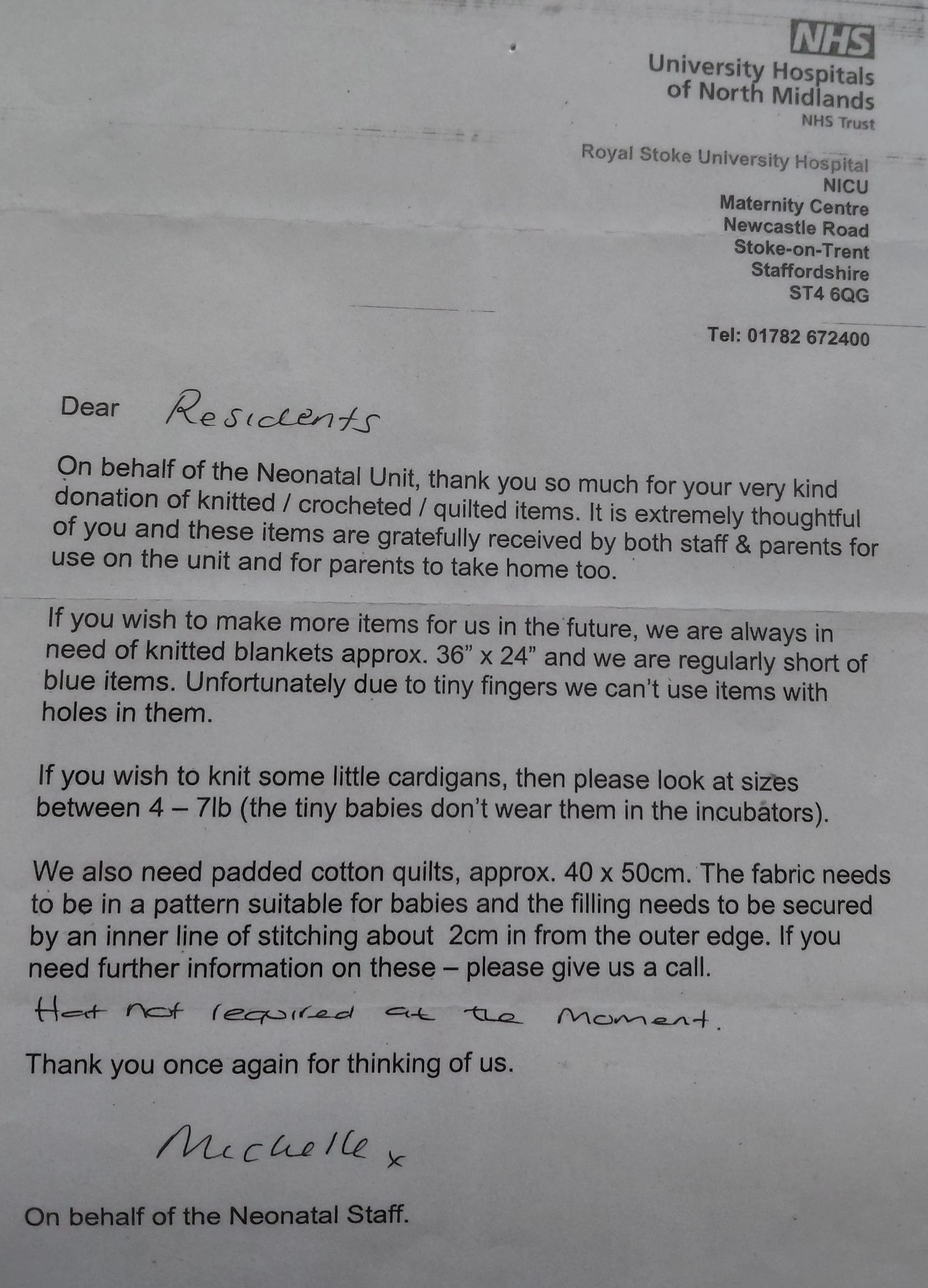
Kathleen has always believed in staying active. Throughout her life she enjoyed yoga, swimming, gardening and ballroom dancing. She is also a keen knitter and still produces many of her own jumpers and clothing today. She has recently also knitted baby bonnets for the neonatal unit at Royal Stoke Hospital.
During her mid years she enjoyed visiting the National Garden Festival when it opened in Stoke-on-Trent in 1986. Kathleen attended on the day it was officially opened by Queen Elizabeth II and became such a regular visitor that she often visited the site every day. She fondly remembers the butterfly house and the steam train that carried visitors across the site and became symbols of the festival.
Family remains central to Kathleen's life, and she is a proud mother of two children, a son and a daughter. Today her family includes five grandchildren and four great-grandchildren.
Five years ago, following a period of rehabilitation at Haywood Community Hospital after breaking both her hip and shoulder, Kathleen moved into St Michael's Care Home. Having experienced several falls and a loss of confidence, she settled quickly into her new surroundings and speaks warmly of the kindness, patience and care shown by staff.
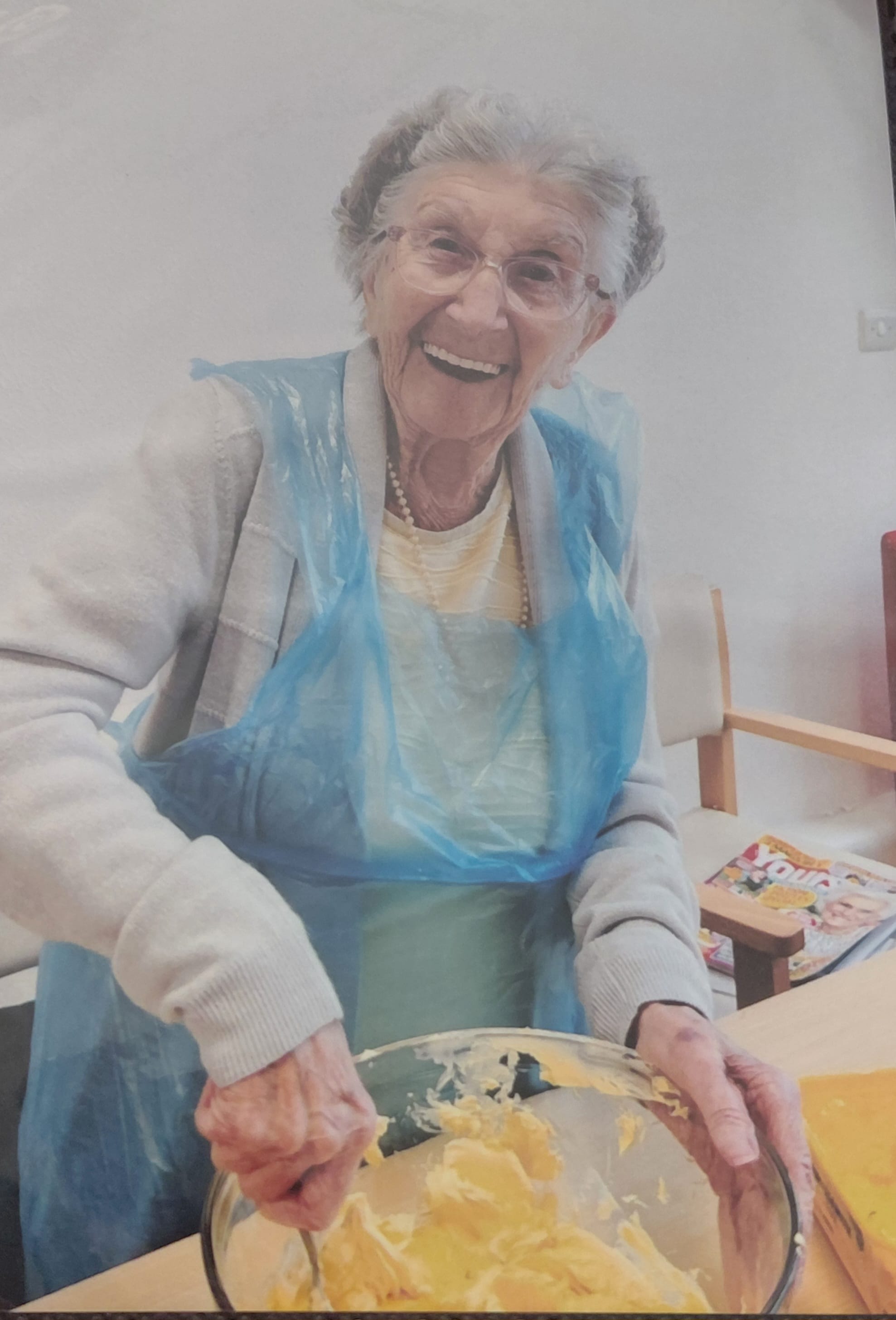
Today Kathleen enjoys taking part in every activity available. She loves quizzes, bingo, potting plants, having her nails done and, of course, baking. She enjoys watching TV, her favourite programmes include Strictly Come dancing, Race Across the World, Call the Midwife and Gardeners' World.
Despite reaching the remarkable age of 103, Kathleen remains able to walk and continues to approach life with positivity. She has never smoked, although she admits she has always enjoyed an occasional whisky. When asked the secret of her longevity, her answer is simple: "Always be happy."
Kathleen says she is satisfied with what she has achieved in life. Among her proudest moments was receiving a birthday card from King Charles III and Queen Camilla on her 100th birthday.
When asked how she would like to be remembered, her answer is straightforward: as Kathleen Oliver.
Her advice to younger generations is equally practical: learn to cook and bake.
After more than a century of life, Kathleen continues to embody resilience, independence, kindness and a determination to make the best of every day.
She has witnessed enormous social change, survived war, built a family, enjoyed lifelong friendships and remained active well into her second century.
After 103 years of life her greatest lesson is the one she has lived by all along:
"Always be happy."
 Why the Signal exists
Real news takes time. Thanks for taking yours.
You've just read a story that took time to get right. No clickbait, no racing to be first, no ads chasing you down the page.
I started The Staffordshire Signal because I got fed up of local news that chased clicks instead of stories. We're independent, not-for-profit, IMPRESS-regulated and owned right here, so we answer to nobody but you.
The honest bit: local news only survives if local people choose it. If we don't, it goes.
Jenna GoodwinFounder and Editor, The Staffordshire Signal
Love what we do?
Buy us an oatcake! Cheese and bacon, if you're feeling generous. Every tip goes straight into local reporting.
Buy us an oatcakeMiss a proper paper?
Staffordshire's only county-wide printed magazine, full of stories worth sitting down with, delivered to your door.
Get it deliveredFollow on WhatsApp
Our stories, dropped straight into your phone. No group chat chaos, we promise.
Join the channelFind something good to do this week
Markets, gigs, history talks and family days out across Staffordshire. Running an event? Add it to our guide and let the county know.
Run a Staffordshire business?
Our readers keep the Signal going, and the businesses who advertise with us help keep it free for everyone. Reach people who read to the end, across our magazine, Signal Weekly, Signal TV and website.
Explore the heart of our county Use the interactive map above to discover local landmarks, heritage sites, and community-vetted spots. Every interaction helps support The Staffordshire Signal’s mission to keep local news free and independent.


